Limb Lengthening Surgery, Explained
How stature lengthening works, which method suits which bone, the week-by-week timeline, the real risks, and what it costs, written by the team of a surgeon who has practised the method since 1980.
Medically reviewed by Prof. Arshak Mirzoyan, MD, DMedSc. Last reviewed 13 October 2026.
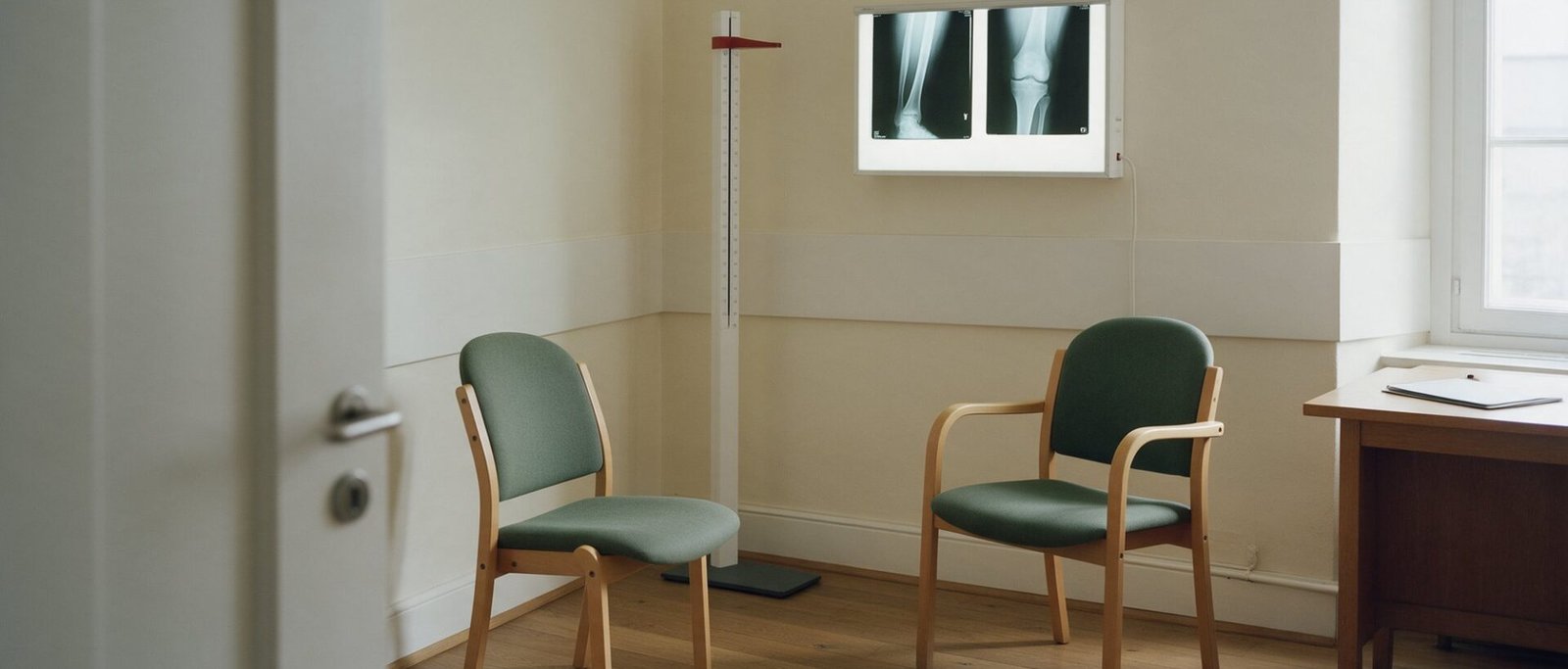
Limb lengthening is orthopaedic surgery that uses your body’s own ability to grow new bone. A surgeon makes a precise cut through the femur or the tibia, fixes the two ends with a device, and then moves them apart by about one millimetre a day. New bone forms in the gap and, over the following months, hardens into bone that is indistinguishable from the rest. Done for height, it is called stature or cosmetic lengthening; done to correct a difference between two legs or a deformity, it is reconstructive. The biology is the same.
What limb lengthening is
The method is called distraction osteogenesis. It was developed by Gavriil Ilizarov in Kurgan in the 1950s and refined over four decades into the techniques used today. The principle has not changed: bone under slow, steady tension grows; bone pulled apart too fast does not. The craft lies in the cut, the rate, the device that holds everything in alignment, and the surgeon’s judgement about when to stop.
A single-segment lengthening (both femurs, or both tibias) typically adds 6 to 8 cm. A staged plan that lengthens both segments can reach 12 to 16 cm in total, over a longer period. The amount that is realistic for you depends on your bone quality, your soft tissues, your proportions and your tolerance for a long process, and it is decided from X-rays, not from wishes.
Who it is for, and who it is not
It is for adults whose growth plates have closed, who are in good general health, and who understand that they are choosing three months of slow daily work in Yerevan followed by a year of rebuilding strength. The patients who do best are patient, well informed, and have a realistic goal.
- Age: 18 or older, with closed growth plates confirmed on X-ray. Most of our patients are 21 to 45.
- Weight: a body mass index under 30 keeps the load on the new bone reasonable; above 35 the surgeon usually declines.
- Smoking: nicotine slows new bone. A stop date well before surgery is a condition, not a suggestion.
- Bone health: osteoporosis, uncontrolled diabetes, clotting disorders and some previous leg surgeries can rule it out.
- Mind: every patient completes a psychological screening before surgery is scheduled. Height is a reasonable thing to want; it is not a cure for everything, and we would rather say so now.
We decline patients. That is the clearest evidence that we are selecting for outcomes, not for volume.
Methods compared
Three methods are performed by Prof. Mirzoyan; a fourth is available on request for suitable cases. The right one depends on the bone, the amount, your lifestyle during distraction and your budget.
| Method | Device | Typical gain per segment | During lengthening | Visible hardware | Removal | From |
|---|---|---|---|---|---|---|
| LON (lengthening over nail) | Internal nail plus a lightweight external frame | Up to 8 cm | Walking with support from the first week | Frame for 2 to 3 months | Frame removed when the length is reached; nail stays until the bone is solid | $[X] |
| Classical Ilizarov | Circular external frame | Up to 6 to 7 cm on the tibia | Weight bearing early; the frame stays through consolidation | Frame for 6 to 9 months | Frame removed when the bone is solid | $[X] |
| LATN (lengthening and then nailing) | External frame, then an internal nail | Up to 6 to 8 cm | As Ilizarov during distraction | Frame removed earlier than classical Ilizarov | Nail placed in a second procedure; frame off | $[X] |
| Femur and tibia, staged | Usually LON on both segments, in two stages | 12 to 16 cm in total | Two distraction periods, months apart | As LON, twice | As LON, twice | $[X] |
| Fully internal magnetic nail | Motorised nail, no frame | Up to 6 to 8 cm | Limited weight bearing; remote-controlled lengthening | None | Nail removed in a later procedure | On request |
Prices are all-inclusive packages and are explained line by line on the cost page.
The timeline, day by day
The figures below are typical for a single-segment LON lengthening of about 8 cm. Your surgeon writes your own plan from your X-rays.
| When | What happens | Where you are |
|---|---|---|
| Before you fly | Video consultation, written candidacy assessment, blood tests at home, stop smoking, daily stretching programme | Home |
| Day 0 | Arrival, transfer, first night in your apartment or hotel | Yerevan |
| Day 1 to 2 | Face-to-face consultation, pre-operative tests, anaesthesia review, consent | Hospital, as an outpatient |
| Day 3 | Surgery, three to five hours under general anaesthesia | Hospital |
| Day 3 to 7 | Private room, pain management, first steps with a walker, physiotherapy begins | Hospital |
| Day 8 to 10 | Distraction starts: four quarter-millimetre turns a day, taught by the nurse | Your apartment |
| Weeks 2 to 12 | About 1 mm a day; physiotherapy five days a week; nurse visits for pin-site care; X-ray every two weeks; surgeon review every two weeks | Your apartment, with transport to the hospital |
| Week 12 to 14 | Target reached. Frame removed in a short procedure; the nail carries the load. Fit-to-fly check | Hospital, then home |
| Months 4 to 9 | Consolidation: the new bone hardens; physiotherapy at home; X-rays sent to the surgeon; walking unaided, then stairs | Home |
| Months 9 to 12 | Return to sport step by step; one-year review by video | Home |
| Later, optional | Nail removal in a short procedure | Yerevan or home |
Pain, sleep and mobility, honestly
The operation is under general anaesthesia, and the first days are managed with proper pain relief in the hospital. Most patients describe the first week as the hardest.
Distraction is more discomfort than pain. The muscles and nerves are being asked to lengthen with the bone, so there is tightness, especially behind the knee and in the calf, and sleep is disturbed in the early weeks until you find positions that work. Pin sites are sore and need daily care. Stretching, which you will do every day, is the thing that keeps the discomfort in check and the joints moving.
With LON you walk with a walker from the first days and with crutches as the weeks go on. You will not run, drive or climb stairs comfortably during distraction. Most patients work at a desk from the second week. Honest patients call the three months hard and worth it. We will not call it painless.
Risks and complications
Limb lengthening is major surgery, and we list every risk in full on the risks page. In summary: infection at pin sites (common and usually minor, occasionally serious), stiffness and contractures of the knee and ankle, nerve irritation or injury, delayed or incomplete bone formation, premature consolidation, deep-vein thrombosis, fat embolism, chronic pain, and the possibility of further procedures. Complication rates rise with the amount of lengthening, which is one reason the surgeon will sometimes recommend less than you ask for.
What matters as much as the list is what happens when something goes wrong: the same surgeon, the same hospital, and a written revision policy you receive before paying anything. Read it on the patient protection page.
What it costs
A single-segment LON lengthening is from $[X], all-inclusive: the surgeon and hospital fees, implants, anaesthesia, the private room, the frame-removal procedure, physiotherapy and nurse visits for the whole stay, X-rays, transfers and your coordinator. Accommodation, flights and meals are separate. The cost page lists everything, including what changes the price and how it compares with Turkey, Germany, the United States and the United Kingdom.
Your surgeon
Prof. Arshak Mirzoyan, MD, DMedSc, has practised orthopaedics since 1980 and trained from 1980 to 1989 in Kurgan under Prof. Ilizarov himself. He founded the Yerevan Center of Limb Lengthening and Reconstruction in 1998, helped establish an Ilizarov centre in Denmark, and has treated more than 5,000 patients. He reviews every international patient’s X-rays personally and operates at a JCI-accredited hospital in Yerevan. Read his full profile.
Questions about the procedure
How much height can I realistically gain?
Most patients gain 6 to 8 cm from one segment. Going beyond that in one segment raises the complication rate steeply, which is why larger goals are planned as two stages on two segments.
Femur or tibia?
The femur tolerates more lengthening and usually gives a more natural proportion for a first stage. The tibia is chosen when the proportions call for it, or as the second stage of a staged plan. The surgeon decides from your measurements.
How long until I walk normally?
Walking with a walker starts in the first week, crutches follow, and most patients walk unaided between four and six months after surgery, once the new bone has consolidated. Running comes later, usually after the one-year mark.
Will I be able to do sport again?
Most patients return to the sport they did before, including running and gym work, once the bone is fully consolidated. High-impact sport is the last thing to come back.
Does the nail stay in forever?
It can. Many patients leave it. Removal is a short, optional procedure after the bone is fully consolidated, and it is quoted separately.
Can the two legs end up different lengths?
Both legs are lengthened at the same rate and checked on X-ray every two weeks, which is how differences are prevented. Small differences can be corrected during distraction.
Will I lose flexibility or athletic ability?
Muscles lengthen with the bone, and stretching is a daily part of the process. Patients who follow the physiotherapy programme regain their range of motion; those who skip it are the ones who report stiffness.
Is there an upper age limit?
There is no fixed limit. Bone quality, general health and the ability to do the daily work matter more than age. Patients over 45 are assessed individually.
What about scars?
Small incisions for the nail and the pin sites, which fade over the first year. We show photographs of healed scars at consultation.
Can I bring someone with me?
Yes, and we recommend it for the first weeks. Companions stay free in our apartments.
Next step
Send us your questions and, if you have them, your X-rays. Prof. Mirzoyan writes a candidacy assessment with a realistic gain range and the method he would use, before any payment.
Begin with a conversation.
No commitment, no pressure. Send your questions and, if you have them, your X-rays. You will hear back from a person within one working day.
Book a private consultation