Is limb lengthening safe? The risks, the numbers, and what ‘managed’ means
Elective major surgery on healthy bone, with a complication list we print in full. What is common, what is rare, why the risk climbs past 5 to 6 cm, and what 'complications are managed' should mean in writing.
Medically reviewed by Prof. Arshak Mirzoyan, MD, DMedSc. Last reviewed 16 October 2026.
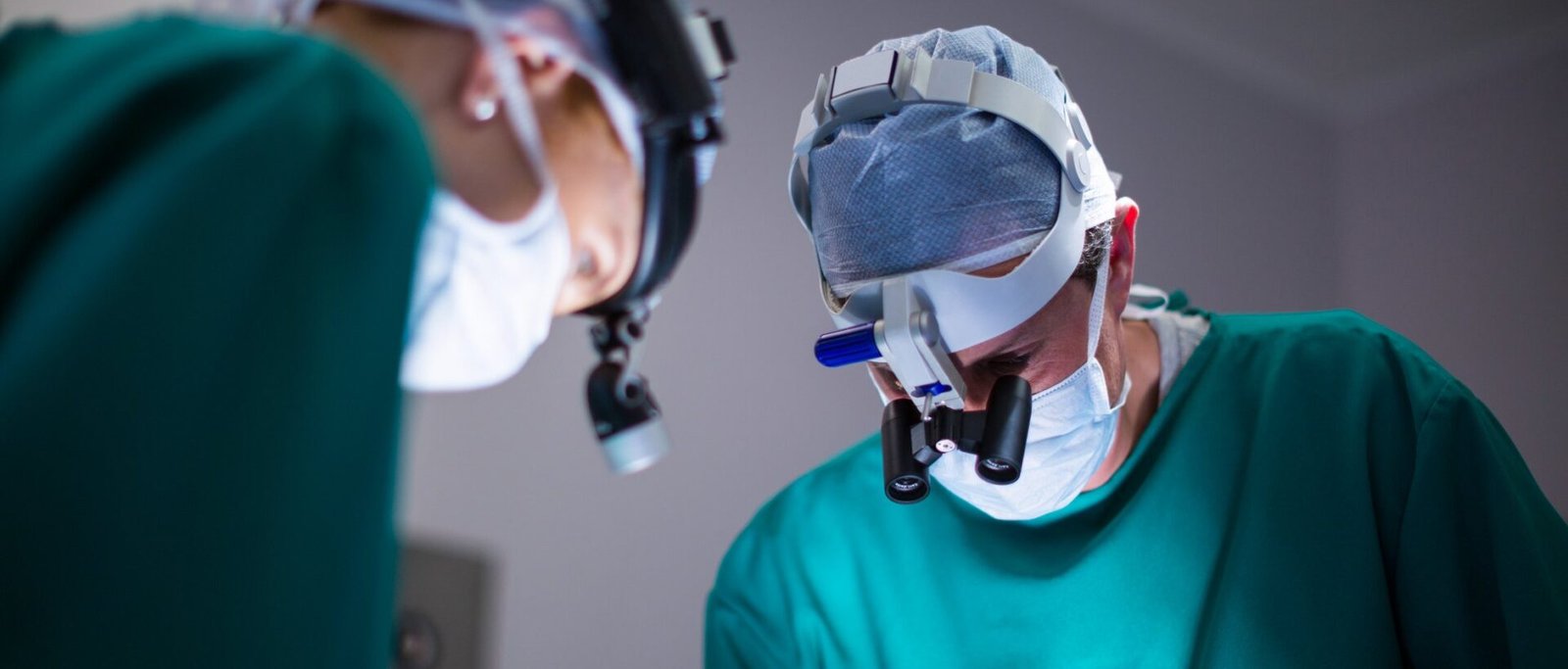
In short: Limb lengthening is elective major surgery on healthy bone, and nobody should call it safe without qualification. Its complications are well described: pin-site infection is common, deep infection and nail breakage are rare, and the risk rises sharply beyond about 5 to 6 cm per bone. What matters is who fixes a problem, where, and whether that is in writing.
“Is it safe?” is the first question in most of the emails we receive, and it is the one we answer least directly, because the honest answer begins with another question: safe compared with what?
Compared with staying the height you are, no. Nobody is harmed by not having this surgery. Compared with other elective operations that involve cutting bone under general anesthesia, it is a procedure with a long track record, a well-mapped set of complications, and outcomes that depend to an unusual degree on two things you can influence: how many centimeters you ask for, and who you ask. That is the frame for everything below. We would rather you read this page and decide against the surgery than read a brochure and decide for it.
Safe compared with what?
It helps to be clear about what lengthening is. A surgeon cuts a healthy femur or tibia in both legs, places a nail inside each, fixes a frame outside, and over roughly 80 days pulls the halves apart about 1 mm a day while new bone forms in the gap. You then wait months for that bone to harden, have the frame removed, and may later have the nail removed. It is a program of surgery and rehabilitation that runs most of a year, and each stage has its own ways of going wrong.
“Safe,” in that setting, cannot mean “nothing goes wrong.” It can only mean three things: that the serious complications are rare, that the common ones are minor and well handled, and that when something does go wrong there is a competent person responsible for fixing it, in a place equipped to do so, under terms agreed in advance. Those are the tests this article applies.
The full list, in plain words
Below is every complication the surgeon discusses at consultation, with the frequency words we actually use. Where a published figure exists we quote it further down; where one does not, we say “common,” “uncommon” or “rare” rather than invent a percentage. We would rather tell you now that a precise rate for most of these, specific to this surgeon and this method, does not exist in a form we could honestly print.
| Complication | How often, in our words | What makes it more likely | What is usually done |
|---|---|---|---|
| Pin-site infection | Common; many patients have at least one site flare during the frame period | Lapses in pin care, skin tension, sweat, smoking | Cleaning and oral antibiotics; a pin is occasionally exchanged |
| Deep infection (bone or around the nail) | Rare | Untreated pin-site infection, smoking, diabetes, poor nutrition | Surgical washout, antibiotics, sometimes nail removal and later re-nailing |
| Nerve irritation or injury | Uncommon; irritation more often than lasting injury; the peroneal nerve on the tibia is the usual culprit | Tibia lengthening, fast rates, large gains | Slow or pause distraction; most irritation settles; rarely a surgical release |
| Joint stiffness and contracture | Common in mild form; serious when neglected | Skipped physiotherapy, gains beyond about 6 cm, tibia for equinus, femur for knee flexion loss | Intensive physiotherapy, splints, slower rate; occasionally tendon lengthening |
| Delayed union or non-union | Uncommon | Smoking, low vitamin D, large gains, rate too fast for the patient | Slow rate, adjust weight-bearing, correct nutrition; rarely bone graft |
| Premature consolidation | Uncommon | Interrupted distraction, rate too slow, young fast-healing bone | Re-osteotomy to restart lengthening |
| Axial deviation (bone drifting off line) | Uncommon with a nail in place | Frame-only methods, muscle imbalance, large gains | Frame adjustment; the nail in LON guides the regenerate |
| Implant failure or nail breakage | Rare | Early or excessive weight-bearing before consolidation | Nail exchange, a real operation |
| Deep vein thrombosis, pulmonary embolism | Uncommon with prophylaxis | Immobility, obesity, smoking, long flights, clotting history | Prevention from day one; anticoagulation if it occurs |
| Fat embolism | Rare; occurs early, in hospital | Instrumenting the bone canal | Supportive care in hospital |
| Chronic pain | Uncommon | Nerve involvement, contracture, large gains | Assessment of cause; physiotherapy; pain management |
| Need for revision surgery | A minority of patients | Any of the above | Same surgeon, same hospital, under the written policy |
The frequency words reflect our experience and the mainstream literature as of October 2026, not a measured rate for any single clinic. A guide, not a quote.
If you want each of these as a scenario, what you would notice, what the surgeon would do and how long it would set you back, we wrote that up separately in when limb lengthening goes wrong. This article stays with the question of how to weigh them.
The numbers that exist, and why they are hard to compare
There is one widely quoted figure, and it is worth understanding properly. The Hospital for Special Surgery in New York reports a 1.2% 90-day complication rate for its femur lengthening, against 8.5% nationally, in its own patient FAQ. We cite it as HSS’s figure, not as a benchmark for anyone else, and we point out three things about it.
First, 90 days. A 90-day window captures the early surgical complications: infection around the wound, blood clots, embolism, problems with the implant at insertion. It does not capture the complications that make lengthening different from other orthopedic surgery, because those arrive later. Contractures set in during consolidation. Delayed union declares itself at month four or five. Nail breakage happens when someone starts running in month six. A low 90-day figure is a good sign about a hospital’s surgical process. It says little about what the patient’s leg is doing at month nine.
Second, definitions. One center counts every pin-site flare treated with antibiotics as a complication; another counts only problems that needed a return to the operating room. The first center will look several times worse on paper while delivering identical care. When a clinic tells you its complication rate, the only useful follow-up is: which complications, over what window, counted how?
Third, femur. HSS’s figure is for femurs, the better-tolerated bone. Tibia series, and series mixing bones and larger gains, look different.
We do not publish a single percentage for Prof. Mirzoyan’s cosmetic lengthening, and we are not going to start because a competitor does. One number would flatter us or frighten you depending on the definition chosen, and either would be a kind of lie. What you get instead is the written risk list the surgeon goes through at consultation, which names each complication above and says what happens if it occurs. We think that is more honest than a decimal.
What pushes the risk up: centimeters, bones, and both at once
The single strongest predictor of trouble is the amount of lengthening. The soft tissue has to stretch to accommodate the new bone, and it tolerates the first few centimeters far better than the last few. Beyond about 5 to 6 cm per bone the complication curve steepens: more contractures, more nerve irritation, more delayed union, more pain. This is why the surgeon’s answer to “how much can I get” is a conversation about your X-rays and your soft tissue, not a menu, and why we tell patients that 6 cm (about 2.4 inches) with an easy recovery is usually a better outcome than 8 cm (about 3 inches) with a stiff knee.
The second predictor is which bone. Femur lengthening is generally better tolerated and allows more gain. The tibia has less soft tissue to spare, a tight Achilles that wants to pull the foot into equinus, and the peroneal nerve running close to the surface on the outside of the knee. Tibia gains are usually limited to 5 to 7 cm for those reasons.
The third predictor is doing both bones at once. Lengthening femurs and tibias simultaneously, four segments, is the approach with the steepest rise in complications, because the patient has four regenerates, two sets of frames, and no stable joint between them to rehabilitate against. For patients who want 12 to 16 cm we stage it: femurs first, consolidation, then tibias, as we describe in our page on staged femur and tibia lengthening. It takes longer. It is safer. We would rather lose the patient who wants it all in one trip.
Method matters too, though less than the three above. With LON the nail protects and guides the regenerate, allows early partial weight-bearing and lets the frame come off as soon as the length is reached, which shortens the time pin sites are exposed. A frame-only Ilizarov course keeps pins in through consolidation, kinder to the wallet and harder on the skin. Fully internal nails remove pin-site problems and bring their own device-related failure modes.
What pushes it down: the surgeon, the hospital, and you
Experience is not a slogan here; it is the thing that turns the complications above from catastrophes into adjustments. A surgeon who has watched thousands of regenerates on X-ray knows what a lagging one looks like at week four, before it becomes a non-union at month five, and slows the rate. A surgeon who has treated foot drop knows the first signs in a patient’s gait. Prof. Mirzoyan has operated since 1980, spent nine years at the Ilizarov institute in Kurgan where the method was invented, and has treated more than 5,000 patients across all limb reconstruction and lengthening work, not only cosmetic cases. We mention the breadth deliberately: reconstruction surgeons have seen bone fail to heal in ways that cosmetic-only surgeons rarely do, and they plan accordingly.
The hospital is the second layer. The surgery takes place at a JCI-accredited partner hospital in Yerevan; its name and certificate are shared at consultation. Accreditation promises nothing by itself, but it does mean the infection control, the anesthesia standards and the emergency pathways have been audited by someone with no interest in selling you surgery. If a deep infection or an embolism occurs, it occurs in a building equipped for it.
The third layer is the structure of the stay. X-rays every two weeks let the surgeon adjust the rate to your bone rather than to a protocol. Physiotherapy five days a week keeps the contracture row of that table in the “mild” column. Nurse visits keep the “common” complication minor. The fourth layer is you: no nicotine, physiotherapy done on the days nobody is watching, weight-bearing kept to what you were told, and the odd sensation in your foot reported the day it starts.
What “managed” actually means when a clinic says it
Every clinic’s website says complications are “managed.” The word does a great deal of work and should be unpacked before you pay anyone. Managed by whom? Where? Who pays? And what happens if the problem appears after you have flown home?
Our answers are these. Complications are managed by the same surgeon, in the same hospital, under a written complication and revision policy that you receive before any payment, alongside the published price and the written risk list. The single-segment LON package is $4,000 per centimetre (8 cm: $32,000), all-inclusive on the medical side, and the written policy is part of what that figure buys; the written quote itself follows the surgeon’s review of your X-rays. The policies are set out on our patient protection page, and we would rather you read them with a skeptical eye than take our summary.
Whoever you choose, a written complication policy worth the name should answer at least these questions:
- What counts as a complication, and who decides: the operating surgeon, or an independent opinion if you ask for one?
- If a revision operation is needed during your stay, who pays for the surgeon, the hospital, the anesthesia and the implants?
- If a problem appears after you have gone home, how is it diagnosed, who reads the X-rays, and under what terms can you return?
- What is excluded, in plain words, and does the exclusion list include things you might reasonably do?
- What is not covered at all: your flights, your extended accommodation, your lost income?
That last line matters. A medical-side policy covers the medical side. It does not pay your rent. A complication that extends your stay by a month costs another month of apartment, from about $900 to $1,400 per month with us, and another month away from work. We put that in writing too, because the patients angriest afterwards are rarely angry about the complication. They are angry about the bill nobody warned them of.
The risks that never make the table
Three things belong in any honest account of safety and rarely appear in a complications list.
The first is psychological. Weeks five to eight of distraction are hard in a way that has nothing to do with bone: disturbed sleep, a body that is tight and sore and does not feel like yours, a city you cannot explore, and a result you cannot yet see. Most people get through it. Some do not enjoy who they are during it. And a small number of patients, afterwards, regret the surgery. Regret in published series is low but not zero, and it is highest in people whose expectations were blind to proportion or who expected their life, not their height, to change. This is why the surgeon’s screening includes questions about why you want this, and why a good program turns some people away.
The second is distance. Having surgery abroad means that at month six, when a specific pain starts, your surgeon is a video call and a flight away rather than across town. We mitigate this with video reviews at around 3, 6 and 12 months, local X-rays sent to the surgeon, and one coordinator from first email to last review. It is workable. It is not the same as being down the road, and you should weigh that against the price difference.
The third is money. Every risk above has a financial shadow: more weeks of apartment, a changed flight, time off work that stretches from three months to five. A patient who has budgeted to the last dollar has chosen a riskier surgery than one who kept a margin, because the first will be tempted to fly home before the surgeon is ready.
So, is it safe?
Here is our answer, as plainly as we can put it. Limb lengthening is elective major surgery with a real complication rate that nobody can honestly reduce to one number. Its serious complications are rare. Its common complications are minor and well handled by an experienced team. Its risk is lowest for a femur, for 6 cm rather than 8, for a non-smoker who does the physiotherapy, and for a patient whose surgeon has seen bone fail and knows what to do about it. And it is only as safe as the arrangements for when something goes wrong, which is why we insist on putting those arrangements in writing before money changes hands. Our full disclosure is on the risks and complications page.
If you have read this far and still want to proceed, send the surgeon your X-rays, tell him what worries you most from the list above, and ask him how each of those risks applies to your legs in particular. His answer will be specific, and it may include the word no.
This article is educational and is not a substitute for a consultation with a qualified surgeon. Individual results vary.
Questions people ask
Is limb lengthening surgery safe?
It is elective major orthopedic surgery with a well-described set of complications, not a procedure anyone should call safe without qualification. Serious complications such as deep infection and nail breakage are rare; pin-site infection is common and usually minor. Risk rises with the amount of lengthening, with tibia rather than femur, and with less experienced teams.
What is the complication rate for limb lengthening?
There is no single honest number. HSS in New York reports a 1.2% 90-day complication rate for its femur lengthening versus 8.5% nationally, but a 90-day window misses contractures, delayed union and nail breakage, which appear later, and definitions vary between centers. Ask any clinic which complications, over what window, counted how.
What is the most common complication of limb lengthening?
Pin-site infection, in any method that uses an external frame, including LON. Many patients have at least one site flare during the frame period. It is usually treated with cleaning and a short course of oral antibiotics, and nurse visits for pin care during the stay keep it minor. Mild joint stiffness is the other frequent one.
Does lengthening more centimeters increase the risk?
Yes, and not in a straight line. Beyond about 5 to 6 cm per bone the complication curve steepens: more contractures, more nerve irritation, more delayed union and more pain, because the soft tissue tolerates the last centimeters far worse than the first. Lengthening femurs and tibias at the same time raises risk further, which is why we stage them.
What should a limb lengthening complication policy include?
In writing, before any payment: what counts as a complication and who decides, who pays for a revision operation during your stay, how problems after you go home are diagnosed and on what terms you can return, what is excluded in plain words, and what is never covered, such as flights, extended accommodation and lost income.
Can limb lengthening be fatal?
Death is very rare but the surgery carries the general risks of major orthopedic operations under anesthesia, chiefly blood clots traveling to the lungs and, early on, fat embolism from instrumenting the bone canal. Prevention starts from day one in hospital, and an accredited hospital with proper emergency pathways is the main safeguard.
Keep reading

Limb lengthening for women: what is different, what is not
The surgery is identical; the questions around it are not. Proportions, bone density, scars in a skirt, where a pregnancy fits, and what the women who write to us actually say.
Read the article
Will You Look Proportionate After Limb Lengthening? Legs, Torso and Clothes
How limb lengthening changes body proportions: leg-to-torso ratio, thigh and shin balance, arms, and what it means for clothes and posture.
Read the article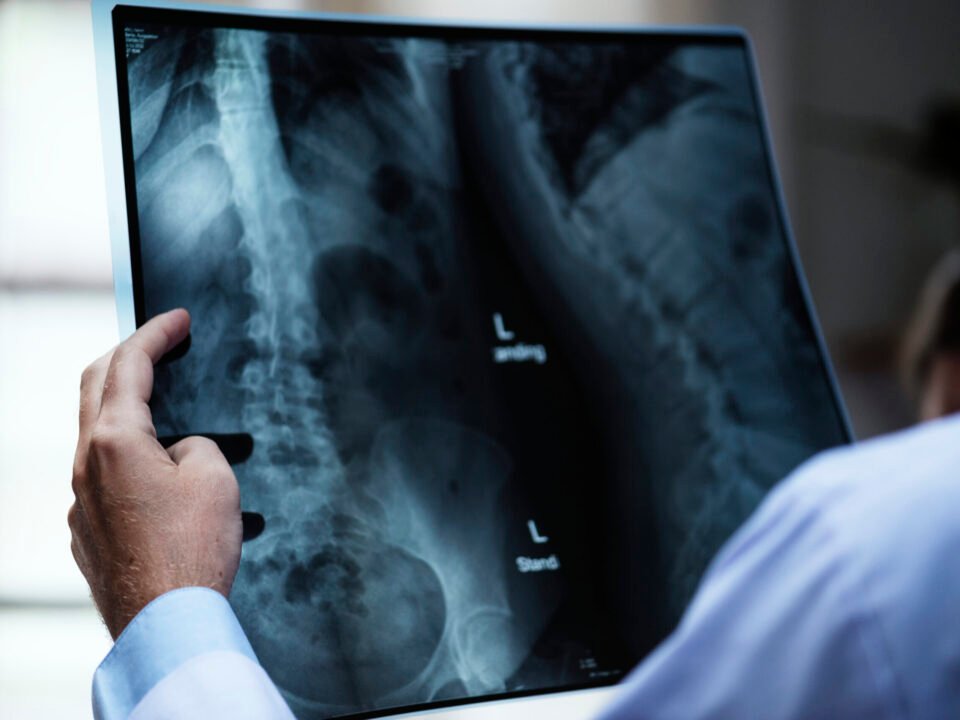
What If the Bone Heals Slowly? Delayed Union After Limb Lengthening
How common slow bone healing is after limb lengthening, what delayed union and premature consolidation mean, and how surgeons manage them.
Read the articleBegin with a conversation.
No commitment, no pressure. Send your questions and, if you have them, your X-rays. You will hear back from a person within one working day.
Book a private consultation