Joint Stiffness After Limb Lengthening: Knees, Ankles and How Much Stretching It Takes
How common stiffness of the knee, hip and ankle is after limb lengthening, what the studies report, how much stretching prevents it, and when to worry.
Medically reviewed by Prof. Arshak Mirzoyan, MD, DMedSc. Last reviewed 10 November 2026.

In short: Joint stiffness is the most common problem after limb lengthening, and the Hospital for Special Surgery calls it the biggest risk of the procedure. In published series, a loss of knee or ankle movement affected roughly 1 in 10 patients with frames and a handful of femoral nail cases; most recovered with physiotherapy and splinting. Daily stretching is not optional.
Bone is not what holds most patients back during lengthening. Muscles, tendons and nerves are stretched along with it, and they lengthen more slowly than the bone can. When they lag, the knee stops straightening, the ankle stops bending, or both.
This article gives the figures that exist, explains why stretching matters so much, and lists what to do when stiffness appears.
What the studies report
In a series of 131 patients lengthened with the Ilizarov frame (Novikov and colleagues, 2014), 14 patients (11%) developed a fixed bend of the knee of 10 to 40 degrees, and all but two recovered with physiotherapy and splinting; 12 (9.2%) developed ankle equinus, where the foot points down, and four were left with only 20 degrees of dorsiflexion at the final review. In a series of 63 cosmetic patients, 21 (33.3%) needed an Achilles tendon lengthening during treatment (Guerreschi and Tsibidakis, 2016).
For femoral magnetic nails, a study of 66 femurs (Galal and colleagues, 2022) found loss of knee movement of 5 and 10 degrees in two nails of each of two types, and hip movement loss of 15 and 30 degrees in two. Those are small numbers from one center. They do not say how many recovered, and the studies use different frames and methods, so they cannot be added together. What they show is that stiffness is common with frames, less common with nails, and rarely absent.
Why stretching matters so much
The Hospital for Special Surgery states that stretching is mandatory and occurs daily for the first six months. One cosmetic series asked patients for 5 to 8 hours of daily training and summarized the lesson as: no clicks, no gain; no training, no flexibility and added muscle loss. Your formal physiotherapy amount will differ from that, and ours is five sessions a week for 12 weeks inside the package, but the principle holds. The best predictor of a comfortable distraction phase, in our experience, is the stretching programme you start before surgery for the hamstrings, calves and Achilles tendon. See physiotherapy during limb lengthening.
Warning signs to report the same day
Tell the team at once if the knee cannot reach its usual straight position in the morning, if your toes begin to point down and the heel will not touch the floor, if tightness becomes a sharp or burning pain, or if numbness or tingling appears (see nerve pain during limb lengthening). Early stiffness is treated with more stretching, splints and, if needed, a slower lengthening rate. Cedars-Sinai notes that slowing the lengthening is a standard response to contractures. Waiting until the next scheduled visit is the common mistake.
What helps
- Start the stretching programme before surgery and do not stop afterwards.
- Keep to the physiotherapy schedule, including at home after the frame is off.
- Use night splints if the team prescribes them.
- Take pain medication early enough to stretch comfortably (see pain relief during limb lengthening).
- Eat enough protein and stop smoking (nutrition and smoking).
When stiffness does not go away
Most stiffness improves once lengthening stops and the frame comes off, but a small number of patients are left with a permanent limit, as the ankle figures above show. Options include more physiotherapy, bracing, soft-tissue releases or tendon lengthening. They are real operations and part of why our complication guide treats this seriously. If you are considering surgery, ask the surgeon how often it happens in his own patients.
Sources: Novikov KI et al., Clin Orthop Relat Res 2014;472:3549-3556; Galal S et al., Arch Orthop Trauma Surg 2022;142:3555-3561; Guerreschi F, Tsibidakis H, J Child Orthop 2016;10:597-604; Guichet JM et al., J Limb Lengthen Reconstr 2022;8:121-129; Hospital for Special Surgery, FAQ about stature lengthening (updated Aug 2026).
How common is knee stiffness after limb lengthening?
In one series of 131 frame patients, 11% developed a fixed knee bend of 10 to 40 degrees and nearly all recovered with physiotherapy. In a study of 66 femoral nails, loss of knee motion of 5 to 10 degrees occurred in four nails. Numbers vary by method and center.
Is joint stiffness after lengthening permanent?
Usually not. Most cases improve with stretching, splinting and time. A minority are left with a permanent limit, as with four patients who kept only 20 degrees of ankle dorsiflexion in one series.
How much stretching is needed?
Daily, for at least the first six months, according to the Hospital for Special Surgery. Amounts vary between teams, with some cosmetic series asking for several hours a day. Follow your own programme.
Can stiffness stop the lengthening?
The surgeon may slow or pause lengthening if the soft tissues or nerves are not keeping up. That response is standard and is far better than pushing on.
Keep reading

The long-term effects of limb lengthening: what the research says happens years later
Most of what you read about limb lengthening ends the day the frame comes off. This article is about the years after: stiffness, bone strength, the second operation, sport, and how people feel at five years.
Read the article
Height dysphoria, body dysmorphia and the screening we insist on
Wanting to be taller is not a disorder. Body dysmorphic disorder is, and surgery does not treat it. How a careful program tells the two apart, the red flags we listen for, and when a psychologist comes before a surgeon.
Read the article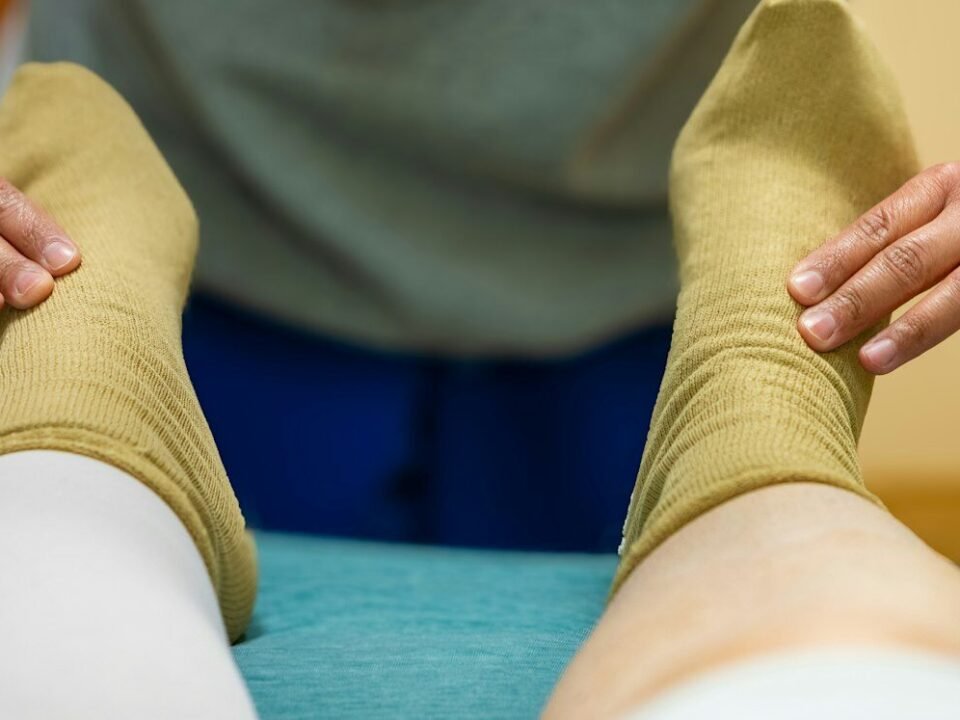
Blood Clots During Limb Lengthening: DVT Risk, Prevention and Warning Signs
How common blood clots are during limb lengthening, who is at higher risk, how DVT is prevented and which warning signs need urgent care.
Read the articleBegin with a conversation.
No commitment, no pressure. Send your questions and, if you have them, your X-rays. You will hear back from a person within one working day.
Book a private consultation