Limb lengthening in the USA, Japan and Armenia: one surgery, three prices
HSS publishes $125,000 for femurs; one Tokyo clinic lists ¥17.8 million for an internal nail; Yerevan is a fraction of both. A country-by-country look at what the money buys and who each suits.
Medically reviewed by Prof. Arshak Mirzoyan, MD, DMedSc. Last reviewed 16 October 2026.
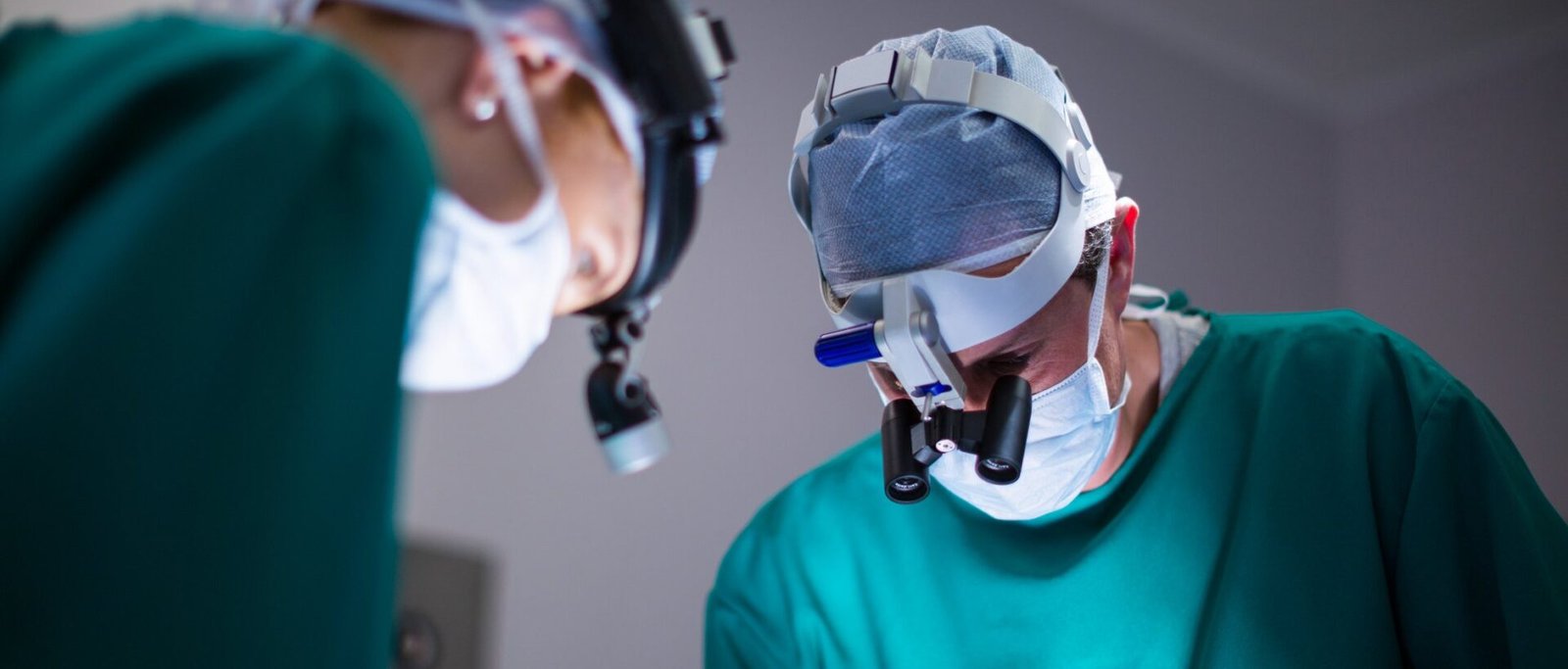
In short: HSS in New York publishes $125,000 for femur lengthening; one Tokyo clinic lists about ¥17.8 million (roughly $118,000) for an internal nail; Yerevan, with a surgeon who trained under Ilizarov, is a fraction of either. The biology is identical. What differs is the device, what the price includes, where you spend three months, and who owns your physiotherapy.
Three quotes, one patient, one pair of femurs.
Last winter an engineer in California, born in Osaka, sent us the three figures he was weighing. HSS in New York: $125,000 for both femurs. A clinic in Tokyo, a train ride from his parents: ¥17,800,000 for a Precice-type internal nail, per procedure. And ours. He had noticed that the first two were close once converted and that the third was not in the same zip code. What he wanted to know was what the gap was made of. A worse operation, a cheaper country, or a different product?
That is a more useful question than “which is cheapest”, and the honest answer is some of the second, some of the third, and none of the first, with caveats we would rather you heard from us. If you want the whole market in one table, Turkey, Korea, Germany, India and Russia included, that is in our line-by-line cost post; here we go deep on three.
The same operation, three times over
Start with what does not change. In New York, Tokyo or Yerevan, the surgeon cuts the femur cleanly, fixes it so it can be pulled apart in a controlled way, waits five to seven days, and then the gap is opened by about 1 mm a day in four turns of 0.25 mm. New bone forms along the line of tension. Eight centimeters (about 3 inches) takes roughly 80 days of distraction, then months of consolidation. No clinic anywhere has found a way to make that go faster, because it is biology rather than technique. The patient in Manhattan and the patient in Yerevan are both looking at about three months near the clinic and most of a year before running.
What changes is everything around the biology: the device, the hospital’s cost base, how much of the three months is bundled into the headline, what rent costs where you spend them, who does your physiotherapy, and what happens when the nail may come out. Hold those in mind and the three prices stop looking like three prices for the same thing.
New York: what $125,000 buys
The Hospital for Special Surgery publishes its stature-lengthening prices, which is rarer than it should be: $125,000 for femurs and $135,000 for tibias, covering surgery, hospital, implants, anesthesia and follow-up. The device is a fully internal magnetic nail of the Precice family. There is no external frame; lengthening is done with a magnet held over the thigh for a few minutes a day, and the marks are limited to the insertion incisions.
HSS sits near the middle of the American market. Premier Limb Lengthening’s 2026 price list has a Precice 2 bilateral femur at $75,500 and the newer Precice MAX at $95,500; a 2026 survey of six US clinics found published ranges from $84,000 to $313,000, median clinic midpoint about $137,600. “The US price” is a band, and the device explains much of the spread.
What the money buys, beyond the operation, deserves a fair hearing, because people who have decided to go abroad tend to undersell it. You are in your own country, in your own language, under a legal system you understand. If a problem appears in month seven, the surgeon who operated is a domestic flight away, and you never board a ten-hour flight with a fresh regenerate. HSS reports a 1.2% 90-day complication rate for its femur lengthening against 8.5% nationally; that is its own figure, but it is the kind of figure a serious program should be able to show you. And the fully internal nail is, for most patients, the easier device to live with: nothing to catch on trousers, no pin sites to clean, showers without choreography.
What the money does not buy is most of the rest of the budget. Physiotherapy is almost always a separate practice, billed separately, which you find and schedule yourself. Three to four months of accommodation near the clinic is yours to arrange, as are travel, meals, a companion and the income you will not earn. And removal of the nails, one to two years on, is a separate operation with a separate bill: Premier lists it at $14,500 for femurs, $17,500 for tibias and $24,500 for both. Insurance will not help with any of it, because stature lengthening is cosmetic; American patients use savings, CareCredit-type financing or loans, which we cover in our post on insurance and financing.
Tokyo: what ¥17.8 million buys
Japan is the second country here because many of our readers live there, and because its prices sit in the same band as America’s, which surprises people. One Tokyo clinic publishes a Precice 2.2 internal nail at ¥17,800,000, approximately $118,000 at the rough rate of ¥150 to the dollar we use throughout. The same clinic lists LON at ¥8,800,000 (approximately $59,000) and an external fixator alone, monorail or ring, at ¥7,700,000 (approximately $51,000). Another clinic’s published range is roughly $49,900 to $115,500 per single bone. A Japanese surgeon quoted in the press puts both tibias or both femurs at about ¥10 million and a 10 cm two-segment plan at about ¥20 million. Magazine round-ups print lower figures, from about ¥4 to 8 million, usually for one segment, one method, before the extras.
Which brings us to the most important words on that Tokyo price list: “per procedure”. Before you compare ¥17.8 million with anything, you need to know whether a procedure is one femur or two. The surgeon quoted at ¥10 million for both femurs suggests that some clinics quote per pair and some per bone, so the same patient can be looking at figures that differ by a factor of two for the same plan. Ask, in writing, “for both legs, how much, and what does it include”. It is not a rude question in any language.
What the money buys in Japan is, first, staying home. Your own language in the consultation and at 2 a.m. in week six. Family within reach. No visa, no flight home on a new regenerate, no currency risk. Japanese medical-advertising rules also require clinics to show treatment content, cost and risks alongside any results, which makes Japanese clinic pages more candid than most; read them closely.
What the money does not buy is choice. Only a handful of surgeons in Japan do cosmetic lengthening at all, which means fewer cases per surgeon, longer waits, and no second opinion across town. It is the reason most Japanese patients who go through with this do it abroad, historically in Turkey and Korea and increasingly in the Caucasus. National health insurance does not cover it, and ¥17.8 million is not a sum most people can pay from one year’s income.
Yerevan: what the Limblong package buys
With us, a single-segment LON package is $4,000 per centimetre (8 cm: $32,000), all-inclusive on the medical side; the written quote follows the surgeon’s review of your X-rays, and he can decline. That figure is an estimate rendered live, which is why it is not typed into this sentence. A staged plan, femur first and tibia later for 12 to 16 cm in total, is $4,000 per centimetre (12–16 cm: $48,000–64,000). The package covers the surgeon and hospital, implants, anesthesia, about four nights in a private room, frame removal, roughly twelve weeks of physiotherapy at five sessions a week, nurse visits, every X-ray during the stay, transfers, mobility aids and one coordinator throughout. It does not cover flights, the apartment (from about $900 to $1,400 per month for the vetted ones we use), meals, insurance, or the optional nail removal later, which is quoted separately. The line-by-line list is on the cost page.
Now the part that explains the price without explaining it away. The surgeon is Prof. Arshak Mirzoyan, in practice since 1980. From 1980 to 1989 he trained and worked in Kurgan at the institute of Gavriil Ilizarov, the man who invented distraction osteogenesis; he wrote his doctoral thesis on the technique and in 1998 founded the Yerevan Center of Limb Lengthening and Reconstruction, which he still leads. He has treated more than 5,000 patients across all limb reconstruction and lengthening, of which cosmetic lengthening is one part; the rest is on the surgeon page. He operates at a JCI-accredited partner hospital in Yerevan; its name and certificate are shared at consultation. The price is lower because Armenian hospital costs, salaries and rents are lower, and because the package is built around one surgeon rather than a marketing department, not because something has been left out of the operating room.
Here is what the money does not buy, and we would rather tell you now. The default device is LON, not a fully internal nail: an internal nail plus a lightweight external frame during distraction, taken off in Yerevan when the length is reached, with the nail left in until consolidation. You will have pin sites to clean, typically six to eight small marks per leg that fade over a year, and you will shower with more planning than the Precice patient in New York. A fully internal magnetic nail is available on request, with availability confirmed at consultation, and is priced differently. What the frame does buy is partial weight-bearing with a walker from the first week, with the nail protecting the regenerate; the trade-offs are on the LON method page.
You are also far from home. From the Americas and East Asia, Yerevan is one connection away via Doha, Dubai or Istanbul; from Europe the flights are direct. You spend 10 to 14 weeks in a city most of your friends could not place on a map, and the consolidation months happen at home, with local X-rays sent to the surgeon and video reviews at around three, six and twelve months. Complications during the stay are managed by the same surgeon in the same hospital; a problem a year later means a local orthopedic surgeon and a call to us, which works and is not a subway ride to the hospital that operated. We are a medical-travel facilitator, not a clinic: the surgery is performed by an independent licensed surgeon in a licensed hospital, and we say so in writing on the patient protection page.
Side by side
Same plan, bilateral femur lengthening of roughly 6 to 8 cm, from three cities. Where a cell says “ask”, the published material does not settle it; get the answer in writing.
| What you are comparing | New York (HSS; Premier) | Tokyo (one clinic’s list) | Yerevan (Limblong) |
|---|---|---|---|
| Headline price, both femurs | $125,000 at HSS; $75,500 (Precice 2) to $95,500 (Precice MAX) at Premier | ¥17,800,000 (approx. $118,000) Precice 2.2; ¥8,800,000 (approx. $59,000) LON; per procedure, confirm both legs | $4,000 per centimetre (8 cm: $32,000), single-segment LON |
| Usual device | Fully internal magnetic nail | Internal nail, LON or external fixator, priced separately | LON; internal nail on request |
| Inside the headline | Surgery, hospital, implants, anesthesia, follow-up | Ask | Surgery, hospital, implants, anesthesia, 4 nights, frame removal, 12 weeks physio, X-rays, transfers, coordinator |
| Physiotherapy | Usually a separate practice, extra | Ask | Included, five days a week |
| Accommodation, about 3 months | Extra, near the clinic | At home for Tokyo residents | Extra, from about $900 to $1,400 per month |
| Nail removal, 1–2 years later | Extra: $14,500 femurs, $17,500 tibias, $24,500 both (Premier) | Ask | Optional, quoted separately |
| Time near the clinic | 3–4 months | About 3 months | 10–14 weeks |
| Insurance | None for cosmetic lengthening | Self-pay | None |
| Language and entry | English; home country | Japanese; home country | English coordinators, interpreters arranged; visa-free for US, UK, EU, Japanese, Korean (180 days), Chinese (90 days) and Russian citizens |
| Published complication figure | HSS: 1.2% at 90 days (its own figure) | Ask | Written complication and revision policy before payment |
Advertised prices from providers’ own pages and 2026 cost surveys, checked October 2026. A guide, not a quote.
Three differences that are not on any price list
The first is who owns your physiotherapy. The bone lengthens because you turn the struts; the muscles, tendons and nerves lengthen only because somebody stretches them, hard, every weekday for three months. In New York it is usually a practice down the road, on your dime and your calendar. In Yerevan it is in the package and on our calendar, which is not generosity but self-interest: we would rather own the outcome than argue about whose fault a stiff knee was.
The second is removal. Every internal nail is a conversation one to two years later, and the country of the lengthening is not necessarily the country of the removal. An American who lengthens in Yerevan and removes in Ohio pays an Ohio price. Budget it on day one, whichever column you choose.
The third is follow-up at home. From month four you are somewhere else, and that period depends on how easily the surgeon who knows your bone can read your X-ray. For the New York patient that is a drive; for the Tokyo patient, a train; for ours, a local X-ray and a scheduled video call, which works, and which is a different thing.
Who each option suits
New York, or the American route generally, suits people for whom the money is available without borrowing, who value staying inside a system they understand, and who want a fully internal nail with the shortest list of unknowns. If the price is not the difference between doing this and not doing it, there are good reasons to stay home, and we will not pretend otherwise.
Tokyo suits Japanese patients who cannot be away for three months, for whom the language of the consultation matters more than the price, and who can get a clear written answer to the per-procedure question and to who provides the rehabilitation. Most Japanese patients vote with their passports; those who stay should insist on volumes and outcomes in writing, exactly as they would abroad.
Yerevan suits people who want a senior surgeon with a long lineage in this specific technique, at a price that can be saved for rather than borrowed, and who can accept three things: an external frame during distraction, a long flight, and 10 to 14 weeks in a small, safe, inexpensive capital far from home. It suits Europeans, Russians and Middle Eastern patients especially well on logistics. It suits Americans who have done the arithmetic and found that the surgery price difference pays for every other budget line several times over.
It does not suit everyone. Not those who cannot take 10 to 14 weeks away, nor those who will not consider a frame and cannot have an internal nail confirmed. Not anyone under 18, anyone who will not stop nicotine, anyone with a BMI over 35 without the surgeon’s agreement, and not anyone whose expectations do not survive the psychological screening. The surgeon turns people down, and the ones he turns down are sometimes the most insistent.
If you are weighing these three
Write the three columns for your own case: your femur plan, your rent, your flight, your income for fourteen weeks, your removal in your own country. Then compare totals rather than headlines. If New York’s total is affordable without debt, it is a reasonable choice; so is Tokyo, if the per-procedure and rehabilitation answers come back clearly. If the Armenian column is the one that turns a loan into a savings plan, and you can live with a frame and a long flight, send your X-rays through the consultation page and let the surgeon say whether you are a candidate before you spend another evening on spreadsheets.
This article is educational and is not a substitute for a consultation with a qualified surgeon. Individual results vary.
Questions people ask
How much does limb lengthening cost in the USA compared to Japan?
They are closer than most people expect. HSS in New York publishes $125,000 for femurs and $135,000 for tibias; Premier Limb Lengthening lists a Precice 2 bilateral femur at $75,500. One Tokyo clinic lists a Precice 2.2 nail at ¥17,800,000, approximately $118,000, and LON at ¥8,800,000, about $59,000. Japanese prices are often per procedure, so confirm whether that means one leg or two.
Why is limb lengthening so much cheaper in Armenia?
Hospital costs, salaries and rents in Armenia are lower, and the Limblong package is built around one surgeon rather than a large clinic organization. The method by default is LON, an internal nail with a light external frame, rather than a fully internal magnetic nail. The biology, the three-month stay and the physiotherapy are the same as anywhere else; the operating room is not where the savings come from.
Is a cheaper limb lengthening surgery abroad lower quality?
Price tracks the country’s cost base and the device more than the surgeon’s experience. The Yerevan surgeon has operated since 1980, trained for nine years at Ilizarov’s institute in Kurgan and has treated over 5,000 patients. What you should verify anywhere is who operates, their case numbers, the hospital’s accreditation, and whether the price, risks and complication policy are given in writing before you pay.
What does the Japanese price per procedure actually cover?
It varies by clinic, which is the problem. Some Japanese clinics quote per bone and some per pair, and a surgeon quoted in the press puts both femurs at about ¥10 million while one clinic lists a single Precice procedure at ¥17.8 million. Ask in writing for the total for both legs, what device is used, how many rehabilitation sessions are included, and what removal will cost later.
Which country is better for limb lengthening: USA, Japan or Armenia?
It depends on money, time and tolerance for distance. The US suits people who can pay without borrowing and want a fully internal nail at home. Japan suits patients who cannot be away for three months and can get clear written answers from one of the few surgeons there. Armenia suits those who want a senior Ilizarov-trained surgeon at a price they can save for, and can accept a frame and a long flight.
Does the Limblong price include physiotherapy and nail removal?
Physiotherapy is included: roughly twelve weeks at five sessions a week, plus nurse visits for pin-site care and all X-rays during the stay. External frame removal when the length is reached is also included. Nail removal, one to two years later, is optional and quoted separately, as it is at most clinics worldwide. Flights, the apartment, meals and insurance are not included.
Keep reading

LimbplastX cost and US limb lengthening prices: what American clinics charge, and what the quote leaves out
A single clinic name drives a lot of searches: LimbplastX in Las Vegas. Here is the figure reported in the press, how it sits next to other US centres, and the questions that make any quote comparable.
Read the article
Limb lengthening cost in Japan: what ¥7.7 to ¥17.8 million buys, and how to compare it with surgery abroad
Japanese clinics publish bone lengthening prices in yen, and the range is wide. Here are the published figures for the three main methods, what the quotes tend to leave out, and what the same operation costs abroad.
Read the article
Documents checklist for limb lengthening abroad: what to send, bring and take home
Every document a limb lengthening patient travelling abroad needs: passport and visa, the X-rays the surgeon must see, the contract and insurance, medicines for customs, and the medical folder to bring home.
Read the articleBegin with a conversation.
No commitment, no pressure. Send your questions and, if you have them, your X-rays. You will hear back from a person within one working day.
Book a private consultation