Documents checklist for limb lengthening abroad: what to send, bring and take home
Every document a limb lengthening patient travelling abroad needs: passport and visa, the X-rays the surgeon must see, the contract and insurance, medicines for customs, and the medical folder to bring home.
Medically reviewed by Prof. Arshak Mirzoyan, MD, DMedSc. Last reviewed 4 November 2026.
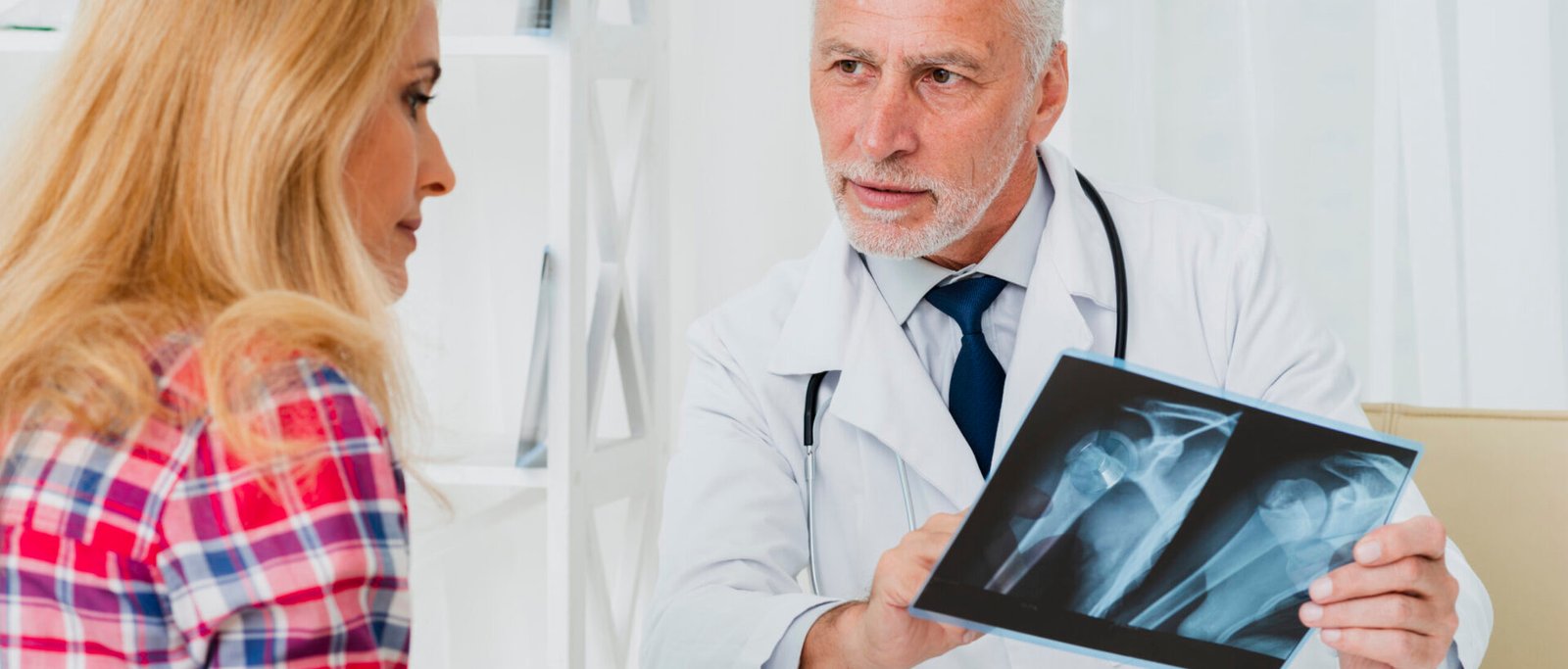
In short: You need four groups of documents: travel (passport valid six months beyond your return, visa if your nationality needs one, return ticket), medical (standing X-rays of both legs, blood tests, a summary of your health and medicines, translated into English), money and legal (a signed contract that lists what is included, insurance, payment records), and the documents you bring home (discharge summary, all X-rays on a drive, a fit-to-fly letter, prescriptions with generic names). Keep paper copies and a cloud folder.
Most problems in medical travel are not dramatic. They are an X-ray taken lying down when the surgeon needed it standing, a prescription the customs officer cannot read, or a passport that expires in the fourth month. This checklist is built from the questions our coordinators answer every week. It goes with the time-based plan in preparing for limb lengthening abroad: a 90-day checklist.
1. Travel documents
- Passport valid at least six months beyond your planned return date. Armenia’s rule is “valid for the whole stay”, but lengthening often takes longer than planned. Check that it has a blank page.
- Visa or e-visa, if your nationality needs one. Most of our patients do not. See Armenia visa for medical treatment, which also covers the residence-permit exemption until July 2027.
- Residence permit card from the US, the EU, a Schengen state or a Gulf country, if you are using it to enter visa-free.
- Return or onward ticket. Make it flexible. Some nationalities must show one to get a visa.
- Accommodation confirmation for Yerevan (we provide it if you stay in one of our apartments).
- Invitation letter and treatment plan from the clinic side, with expected dates. Useful for visa applications, employers and insurers.
- Embassy registration at home: STEP for US citizens, 在留届 for Japanese citizens staying three months or more, and the equivalent for your country.
- A companion’s documents, if someone comes with you. Their visa rules are the same as for any visitor of their nationality.
2. Medical documents for the surgeon’s review
These are what Prof. Arshak Mirzoyan needs to tell you whether you are a candidate and which bone to lengthen.
- Standing full-length X-ray of both legs (hips to ankles, both legs on one image, with a calibration marker if possible). This is the single most important document. A lying-down X-ray is not a substitute.
- Height and body measurements: standing height, sitting height, arm span, weight. A short guide is sent with the consultation form.
- Medical history: past operations, fractures, chronic conditions, previous blood clots, bleeding problems, allergies, mental health treatment.
- Current medicines with generic names and doses, including supplements and contraception (some raise clot risk).
- Recent blood tests (usually within one to three months before surgery): full blood count, clotting tests, kidney and liver function, glucose or HbA1c, vitamin D, and infection screening as requested.
- ECG, and a chest X-ray if your doctor or anaesthetist requests one.
- Letters from specialists if you have a chronic condition.
Language: English is best. Original reports in Japanese, Chinese, Korean or Russian are fine to send for the first review, but a translation of the key reports speeds everything up. Images (X-rays) need no translation. Send DICOM files where you can, not phone photos of a screen.
3. Contract, money and insurance
- The written contract, signed before any payment, stating the method, the target, what is included (surgery, hospital nights, implants, physiotherapy, apartment, transfers, follow-up) and what is not.
- The policy for complications and revisions: who pays if a second operation is needed, and in which cases. Ask for it in writing. Our approach is described in patient protection.
- Payment schedule and receipts. Keep proof of every bank transfer.
- Informed consent forms in a language you read well. You should receive them in advance, not on the morning of surgery.
- Insurance documents: your travel insurance policy with the emergency number, and any specialist complication cover. Most ordinary travel insurance does not cover planned surgery; see the insurance section in our UK, Europe, Canada and Australia guide.
- Bank card and a backup card, plus cash in USD or EUR. Cash over USD 10,000 must be declared on entry and exit.
- Proof of funds, if your visa application needs it.
4. Medicines and customs
- Into Armenia: ordinary personal medicines are allowed (up to 10 kinds, three packs each, more with a doctor’s document). Narcotic and psychotropic medicines require medical documents in Armenian or with a notarised Armenian translation, and a customs declaration, and only drugs registered in Armenia may be imported. Do not bring strong painkillers from home; they are prescribed locally.
- Back home: rules are strict in several countries. The US allows at most 50 dosage units of controlled substances obtained abroad. Japan requires a narcotics import permit applied for about two weeks in advance. See the USA and Japan guides.
- A doctor’s letter in English listing each medicine by generic name, dose and reason, signed and dated.
- Keep medicines in their original packaging, in your hand luggage.
5. The documents you take home
This is the folder your doctors at home will rely on, and the one patients most often leave incomplete.
- Operation report: the method, the implant, its size and serial number.
- Implant card or implant letter, useful at airport security and for any future MRI.
- Discharge summary with the lengthening achieved, the current phase, and instructions.
- All X-rays from day one to departure, on a USB drive and in a cloud folder, as DICOM files.
- Physiotherapy programme in writing, with the exercises and targets your home physiotherapist should follow.
- Follow-up schedule: when to take X-rays, when to send them, and how the remote reviews work.
- Fit-to-fly letter and, if your airline asks for it, the airline’s medical information form (MEDIF), completed by the treating doctor. See flying after limb lengthening.
- Blood-thinner plan if you are prescribed injections for the flight.
- Plan for implant removal, if your method needs it (see nail removal).
- Contact details of the surgeon and coordinator for questions from your local doctors.
- Final invoice and receipts.
How to keep it all
- One paper folder with copies of everything important, in your hand luggage.
- One cloud folder shared with a family member at home.
- Photos of your passport and insurance card on your phone.
- One page with your emergency contacts in Yerevan and at home, in English.
The short version, to print
| Before you go | Bring with you | Bring home |
|---|---|---|
| Standing leg X-rays, measurements, medical history, medicines list | Passport (6+ months), visa if needed, ticket, insurance | Operation report, implant card, discharge summary |
| Blood tests, ECG, specialist letters | Contract, consent forms, payment proof | All X-rays (DICOM), physio programme, follow-up plan |
| Embassy registration, leave from work | Personal medicines with doctor’s letter | Fit-to-fly letter, MEDIF, prescriptions (generic names) |
The first step is the simplest: send a standing X-ray for a private consultation. We will tell you which other documents your case needs.
This checklist is general guidance. Your surgeon, anaesthetist, airline and the authorities of your country may require additional documents.
Questions people ask
What documents do I need for surgery abroad?
A passport valid well beyond your return, a visa if your nationality needs one, a return ticket, your medical records and X-rays, a signed treatment contract, insurance documents, and a doctor’s letter for any medicines you carry.
Which X-ray does a limb lengthening surgeon need?
A standing full-length X-ray of both legs, from the hips to the ankles, on one image, ideally with a calibration marker. A lying-down X-ray is not a substitute.
Do my medical records need to be translated into English?
Images do not. Reports in other languages are acceptable for a first review, but translating the key reports and the medicines list into English makes the assessment faster and avoids mistakes.
What documents should I bring home after limb lengthening?
The operation report with implant details, an implant card, the discharge summary, all X-rays as DICOM files, the written physiotherapy programme, the follow-up schedule, a fit-to-fly letter and prescriptions listed by generic name.
How long should my passport be valid for treatment in Armenia?
Armenia requires it to be valid for the whole stay. Because lengthening often takes longer than planned, we recommend at least six months of validity beyond your planned return date.
Keep reading
Does insurance cover limb lengthening? Financing, loans and the honest math
Insurance does not pay for cosmetic limb lengthening anywhere. What Americans and Britons actually use, what financing $125,000 costs over five years, and why the country matters more than the loan.
Read the article
Limb lengthening in the USA, Japan and Armenia: one surgery, three prices
HSS publishes $125,000 for femurs; one Tokyo clinic lists ¥17.8 million for an internal nail; Yerevan is a fraction of both. A country-by-country look at what the money buys and who each suits.
Read the article
How much does height surgery cost per centimeter? A better way to compare
Quotes for height surgery differ by a factor of five, and most are not comparable as written. Cost per centimeter, worked through with 2026 prices, plus eleven questions to ask and the quotes to distrust.
Read the articleBegin with a conversation.
No commitment, no pressure. Send your questions and, if you have them, your X-rays. You will hear back from a person within one working day.
Book a private consultation