The best country for limb lengthening doesn’t exist. How to pick yours
Countries do not operate; surgeons do. Seven countries compared on what a country actually decides: price, visa, the three-month stay, language and follow-up, with five questions to rank them for yourself.
Medically reviewed by Prof. Arshak Mirzoyan, MD, DMedSc. Last reviewed 16 October 2026.
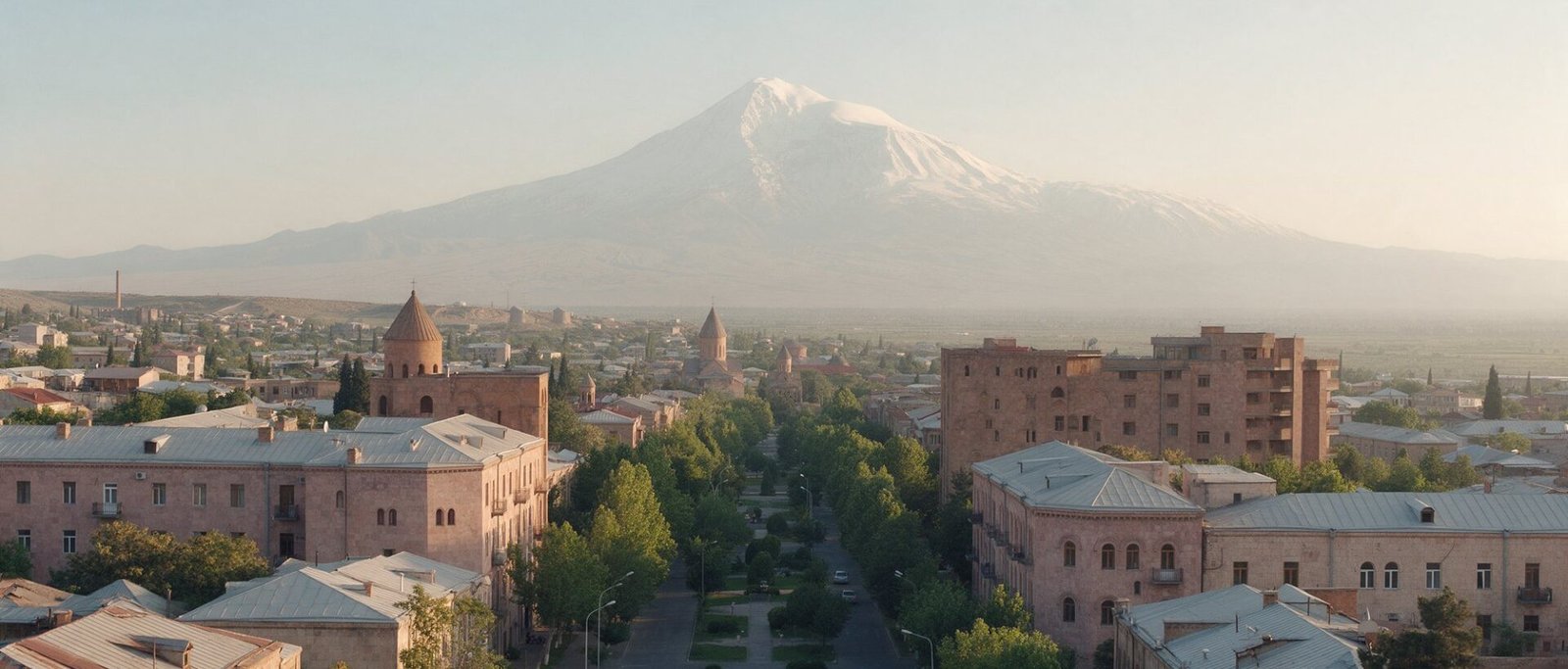
In short: No country is the right answer for everyone. The USA, Germany, Turkey, South Korea, India, Russia and Armenia differ on surgeon seniority, price, visa rules, safety, the cost of a three-month stay, language and follow-up. We compare them point by point and give you five questions to rank them for your own situation.
A reader in his late twenties sent us a spreadsheet earlier this year. Seven countries down the side, eleven columns across, color-coded. He had spent, by his own count, about four months on it. Turkey was green in most columns. The USA was green in two and red in one, the price column, and that single red cell was the reason he was writing to anyone outside New York at all.
We get a version of that spreadsheet every few weeks. The columns change and the winner changes, and the search that started it is almost always the same four words: “best country for limb lengthening”.
We would rather tell you now that the search has no answer. Countries do not operate. Surgeons do, in specific hospitals, with specific devices, and the variation inside a country is larger than the variation between countries. What a country does decide is the frame around the surgery: what it costs, whether you can get in, what three months there feel like on crutches, and what happens after you fly home. This piece is about that frame. It is not a ranking, and Armenia, where we work, does not come first in every column.
Start with the surgeon, then look at the flag
The first thing to be skeptical of in any country comparison, including this one, is the quiet assumption that “Turkey” or “Germany” is a quality level. It is not. In every country on this list there are surgeons who have done lengthening for decades and surgeons who added it to a trauma practice two years ago because the inquiries kept arriving. Their price lists look similar. Their complication rates do not.
So settle the surgeon question before you open the spreadsheet. Who will hold the saw, as opposed to who owns the website. How many lengthening cases, over how many years, with which methods. Whether the hospital’s accreditation is something you can verify yourself rather than a logo in a footer. We wrote a separate piece on the twelve questions to put to any surgeon or agency, and nothing below replaces it.
What a country comparison can tell you is where senior surgeons are concentrated and how expensive it is to reach them. In the USA, a few named centers do real volume and publish their numbers. Germany has a deep orthopedic tradition and prices to match. Turkey has, by a wide margin, the most agencies and the most patients, which brings experience and also a very wide spread between operators. South Korea has established clinics in Seoul. India has capable surgeons at the lowest prices on the list and the widest gap between the top and the rest. Russia has Kurgan, where the method was invented. Armenia has one senior surgeon we know well, Prof. Arshak Mirzoyan, who trained in Kurgan at Ilizarov’s institute from 1980 to 1989 and works at a JCI-accredited partner hospital in Yerevan whose name and certificate are shared at consultation.
A cheap country with a junior surgeon is not a bargain. An expensive country with a senior one is not automatically safer either; it is just expensive.
What the money buys, country by country
Published prices are a starting point and nothing more, because they differ in what they include. We keep a full line-by-line budget elsewhere on the site; here is the short version for a single-segment plan, usually both femurs, with the method named where the provider names it.
| Country | Advertised price, single segment | What tends to be extra |
|---|---|---|
| USA | HSS (New York): $125,000 femurs, $135,000 tibias. Premier Limb Lengthening: Precice 2 bilateral femur $75,500, Precice MAX femur $95,500. A 2026 survey of six clinics: $84,000–313,000 | Physiotherapy, 3–4 months of accommodation, travel, and hardware removal ($14,500–24,500) |
| Germany | About $50,000–80,000 (survey range $37,800–172,800 depending on method) | Accommodation; depends on clinic |
| Turkey | LON about $26,400 at the leading agency; LON generally $26,400–38,000; Precice 2 $56,000–58,000 | Recovery apartment, about $6,750 for 3 months at that agency |
| South Korea | Two Seoul clinics: about $26,000–95,000 (LON at the low end, Precice at the high end) | Accommodation, physio arrangements vary |
| India | LON about $9,600–25,200 | Varies widely by clinic |
| Russia | Kurgan Ilizarov Centre full course, patient-reported, about $8,000–20,000; Moscow private “operation-only” $2,300–3,800 | In Moscow, almost everything: hospital days, physio, X-rays, follow-up |
| Armenia (Limblong) | Single-segment LON, all-inclusive on the medical side: $4,000 per centimetre (8 cm: $32,000) | Flights, accommodation, meals, insurance, optional nail removal |
Advertised prices from providers’ own pages and 2026 cost surveys, checked October 2026. A guide, not a quote.
Two things the table hides. The first is the second operation. The nail usually comes out one to two years later, and in the US that is priced separately: $14,500 for femurs, $17,500 for tibias, $24,500 for both, on the 2026 Premier list. Abroad it is quoted separately too, including by us, but at a different scale. The second is what “all-inclusive” means. Our package covers the surgeon and hospital fees, implants, anesthesia, about four hospital nights in a private room, frame removal, roughly twelve weeks of physiotherapy and nurse visits, every X-ray during the stay, transfers, a walker and crutches, a coordinator and a written complication policy; the written quote follows the surgeon’s review of your X-rays, and the cost page lists every line. Ask every provider in every country for the same list, item by item. The answers vary more than the headline numbers do.
Three months somewhere: the stay nobody puts in the headline
Lengthening is not a week abroad. At about 1 mm a day, 8 cm (about 3 inches) takes roughly 80 days of distraction, and with the first week after surgery and frame removal at the end, a single-segment LON stay is 10–14 weeks. Physiotherapy is five days a week for most of it. You are not choosing an operating room. You are choosing a city to live in on crutches for a season.
In the USA that means three to four months near the clinic; for American patients from other states, the stay is often the second-largest line in the budget after the surgery itself. In Istanbul, the leading agency prices a recovery apartment at about $6,750 for three months. In Yerevan, the apartments we vet come to from about $900 to $1,400 per month. In Kurgan, accommodation sits inside the institute’s course and the city is small and a long way from everything. India and Korea vary by city and by how much the clinic does for you.
What decides whether a city works on crutches is not the rent. It is the stairs, the width of the bathroom door, whether the shower has a lip, whether there is an elevator. It is whether groceries can be delivered, whether the internet is fast enough to keep your job, and whether anyone on the ground is responsible for all of this or whether it is you, from a hospital bed, on a translation app. When you compare countries, ask who vets the apartment. In our case it is us, and we check the elevator and the step-free shower before anything else; the stay page covers the rest.
Visas, flights and the arithmetic of distance
Entry is the dullest column in the spreadsheet and the one most likely to stop everything a week before departure. The rules change, so verify them with the relevant consulate, not with a blog, including this one. What we can say for Armenia: citizens of the USA, UK, EU countries, Japan and South Korea enter visa-free for up to 180 days, Chinese citizens for 90 days, and Russian citizens enter visa-free. Re-check on mfa.am before you book flights. A 12-week stay fits inside all of those windows with room to spare, which is not true of every country’s standard tourist entry.
Flights are where Turkey wins outright. Istanbul is one of the largest hubs in the world; whatever city you live in, there is probably a direct flight. Yerevan has direct flights from Paris, Frankfurt, Vienna, London, Warsaw, Doha, Dubai, Istanbul, Moscow and Ürümqi, and from the Americas and East Asia it is one connection, via Doha, Dubai or Istanbul. The USA is the easiest country of all to reach if you are American and among the hardest if you are not. Germany is easy from Europe.
Distance matters less for the flight out than for the flight home with a nail in each femur, and for any trip you might need to make again. A country you can return to for a review or a removal in a single flight is worth something. For many Americans that argues for staying in the USA; for a reader in Manchester or Munich it argues for anywhere within four or five hours.
Safety, language and how a bad week goes
Safety comes up in every inquiry and is rarely measured the same way twice. The Numbeo safety ranking for 2024 placed Armenia 7th of 146 countries and Yerevan 15th of 329 cities (via Ecolur). Look up the other countries on the same index rather than taking any provider’s word, ours included. Then think about what safety means on crutches: not street crime so much as pavements, drivers, ice in winter, and whether you would feel fine walking home from physio alone at 7 p.m.
Language is simpler than people fear and more important than the spreadsheets admit. In the USA and UK you will never think about it. In Germany, Turkey, Korea, Russia, India and Armenia you will depend on an interpreter at some point, and the question that matters is whether the surgeon can speak to you directly or only through someone paid by the agency. In Yerevan, Russian is widely spoken and the surgeon speaks it; coordinators speak English; Chinese, Korean and Japanese interpreters are arranged. Ask every country option the same question: who do I talk to, in what language, at 2 a.m., when a pin site looks angry and I am not sure whether that is normal. The honest answer in most places is a messenger app and a coordinator. Ask how many patients that coordinator is carrying at once. With us it is one per patient, start to finish, and we still think you should ask.
Follow-up: the part that happens after you fly home
Frame removal is not the end. The regenerate consolidates for months after you leave, and in that period the questions get subtler: is this X-ray at month five what it should be, is this knee stiffness normal, when can I stop the crutches. Wherever you have the surgery, you will be sending X-rays from home and getting on video calls at around three, six and twelve months.
Here the USA has a real advantage that no foreign option replicates: if you live within driving distance of your surgeon, you can be in the clinic the next morning. Everyone else, including Americans who travel to another state, is in the same position as a patient who went abroad. For them the question is not geography but paper. Who manages a complication, in which hospital, at whose cost, and is any of that written down before you pay. With us, complications are managed by the same surgeon in the same hospital, and the complication and revision policy is handed over in writing before any payment, along with the price and the risk list; the patient protection page describes exactly what those documents say. Ask every country option for the equivalent document. The speed and clarity of that answer tells you more than the flag does.
Five questions that rank the countries for you
Put the spreadsheet away for a moment and answer these in order, as we would on your behalf if you were a relative.
- Who exactly operates, and can I verify it independently? If the answer is a brand rather than a name, or a name without a traceable history, stop there regardless of the country.
- What is the total, not the headline? Add the removal surgery, the three-month stay, flights for you and perhaps a companion, physiotherapy if it is not included, the income you will not earn, and a buffer we would put at roughly a fifth on top. Compare totals, never list prices.
- Can I get in, get out, and get back? Visa window long enough for 14 weeks plus a delay; a flight home you can manage with new hardware; a realistic way to return if needed.
- Can I live there for twelve weeks on crutches? Stairs, elevator, shower, internet, food you can eat for three months, a language you can get help in, weather in the season you will be there, and something to do on the days you feel flat, because there will be some.
- What happens, in writing, if something goes wrong? Who, where, at whose cost, and will you see those terms before money moves.
Score each country from one to five on each question, then weight the questions by what you actually care about rather than what forum consensus says you should. A 42-year-old American with a flexible employer, a house near a major center and the savings to pay $125,000 may rightly rank the USA first; the follow-up advantage is genuine. A 26-year-old in Leeds with £30,000 and a remote job will weight distance and total cost and probably end up choosing between Turkey and Armenia. A Japanese reader facing ¥17.8 million (approximately $118,000) at home for an internal nail will rank almost everywhere above Tokyo on price and then decide on surgeon and language. None of them is wrong. They are solving different problems.
Where this leaves Armenia, and us
We should be plain about where we fall in our own framework. Armenia is the wrong choice if you want to drive to your follow-ups. It is the wrong choice if you want the largest patient community and the most video diaries to watch before you commit; Turkey has far more of both. It is the wrong choice if you want a fully internal magnetic nail at a published price with confirmed availability; here it is on request and confirmed at consultation, while US and Turkish providers list it openly. It is a long day of travel from the US West Coast, and it is a small country where a season can feel quiet if you need noise.
It is a reasonable choice if you want a named surgeon with more than four decades of lengthening behind him, a program small enough that he reviews your X-rays himself every two weeks, a total that is a fraction of the US figure, a safe and walkable city, and policies on price, risk and complications that arrive in writing before anything else does. That is a specific set of priorities, and it is not everyone’s.
If you want to find out which column you would actually be in, send your X-rays, height and a short history and ask the surgeon whether you are a candidate at all. That question comes before the country question, and sometimes the answer is no, which is worth knowing before you compare anything.
This article is educational and is not a substitute for a consultation with a qualified surgeon. Individual results vary.
Questions people ask
Which country is the cheapest for limb lengthening surgery?
On advertised prices, Russia and India are the lowest: Kurgan’s full course is reported at about $8,000–20,000 and Indian LON packages at roughly $9,600–25,200. Armenia and Turkey sit in the next band. The cheapest list price is rarely the cheapest total, because stay, physiotherapy, removal and follow-up may be billed separately, so compare complete budgets.
Is limb lengthening abroad safe?
Safety depends far more on the individual surgeon, hospital and the amount lengthened than on the country. Ask who operates, how many cases they have done, whether the hospital holds an accreditation you can verify, and who manages complications after you go home. A written complication policy shared before payment is a stronger signal than a country name.
Why do so many people choose Turkey for limb lengthening?
Turkey has the most agencies, the most patients, the most flights into Istanbul and by far the most patient videos online, with LON advertised from about $26,400. That scale brings experience and also a wide spread between providers, so the usual vetting questions about the operating surgeon and the hospital still apply.
How long do I have to stay in the country after limb lengthening?
For a single-segment LON plan, typically 10–14 weeks: surgery, about four hospital nights, roughly 80 days of distraction for 8 cm, then frame removal. Consolidation continues at home for months afterward with X-rays sent to the surgeon. Some countries’ standard tourist entry does not cover a stay that long, so check visa windows early.
Do I need a visa for limb lengthening in Armenia?
Citizens of the USA, UK, EU countries, Japan and South Korea enter Armenia visa-free for up to 180 days, Chinese citizens for 90 days, and Russian citizens enter visa-free. Rules change, so re-verify on the Armenian foreign ministry site, mfa.am, before booking. A 12-week stay fits inside each of those windows.
Is the USA better than going abroad for limb lengthening?
For Americans who live near a major center and can pay $75,500–135,000 plus stay and removal, staying home brings a real advantage: in-person follow-up. For most others the price gap is large enough that a senior surgeon abroad with written policies is a reasonable alternative. It depends on budget, distance and how you weight follow-up.
Keep reading
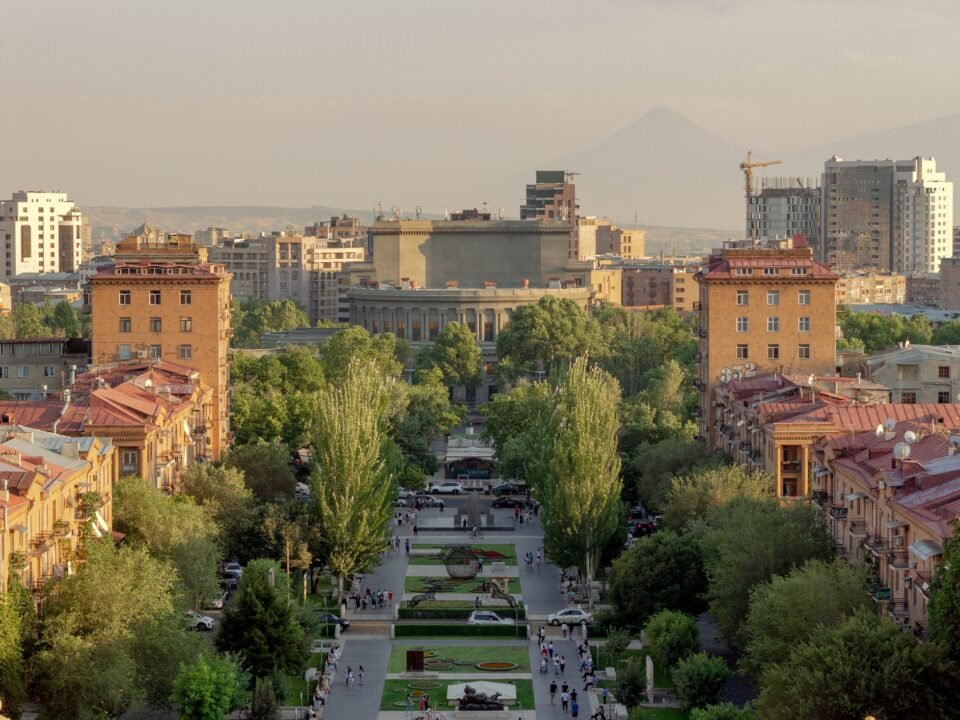
Armenia visa for medical treatment: who needs one, how long you can stay, country by country (2026)
Who can enter Armenia without a visa and for how long, which nationalities need an e-visa, the fees and extensions, the temporary exemption for US, EU and Gulf residence-permit holders, and what this means for a 3 to 5 month treatment.
Read the articleLimb lengthening in Armenia: what to know before you book
Most people who message us had never thought about Armenia before they typed it into a map. The surgeon, the hospital, visas, flights, money, safety, apartments, and the drawbacks we would rather you heard from us.
Read the article
Preparing for limb lengthening abroad: a 90-day checklist
The patients who do well in week six are usually the ones who did boring things in week minus eight. A dated checklist from ninety days out to the flight home: tests, paperwork, work, money, packing and follow-up.
Read the articleBegin with a conversation.
No commitment, no pressure. Send your questions and, if you have them, your X-rays. You will hear back from a person within one working day.
Book a private consultation