Limb lengthening in Armenia: what to know before you book
Most people who message us had never thought about Armenia before they typed it into a map. The surgeon, the hospital, visas, flights, money, safety, apartments, and the drawbacks we would rather you heard from us.
Medically reviewed by Prof. Arshak Mirzoyan, MD, DMedSc. Last reviewed 16 October 2026.
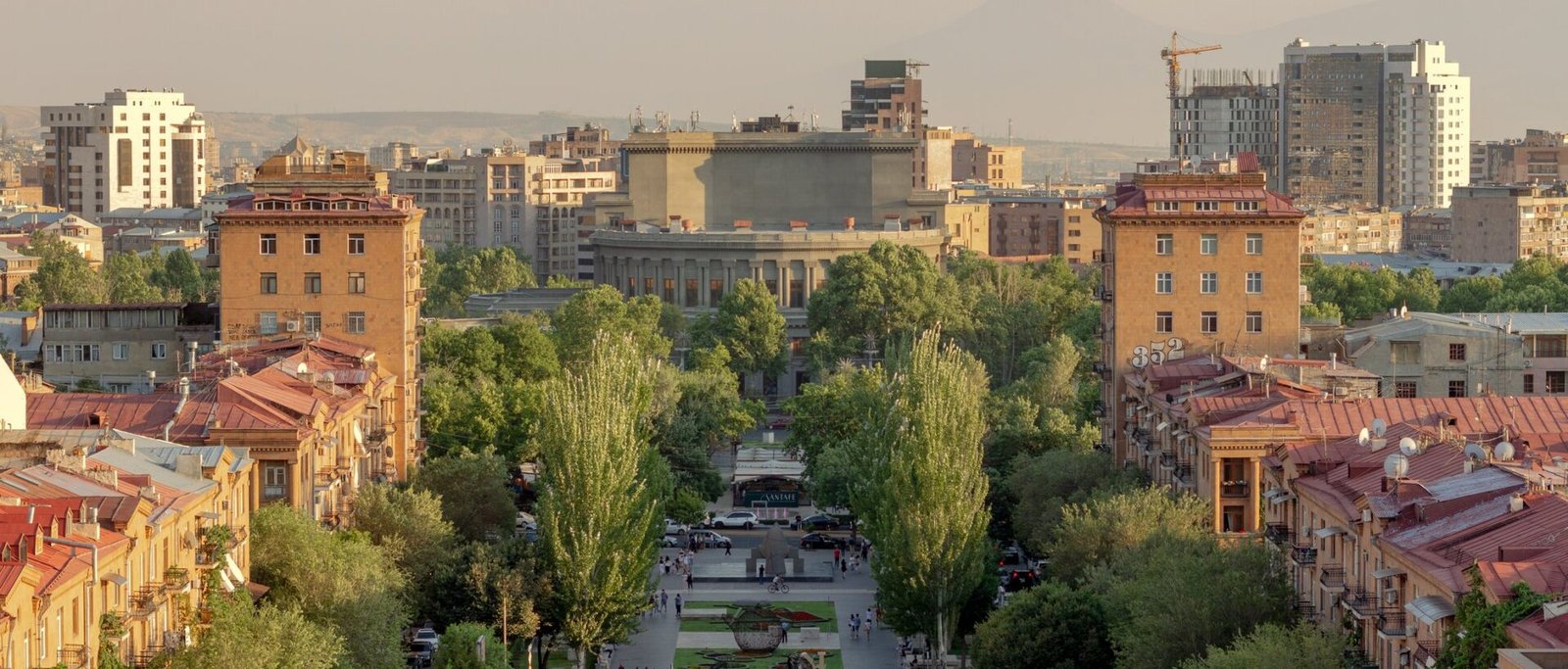
In short: Armenia offers one senior surgeon trained at Ilizarov’s institute, a JCI-accredited partner hospital in Yerevan, visa-free entry for most nationalities, a safe and compact city and an all-inclusive LON package. It is also far from the Americas, short on patient videos, and older buildings have stairs. Here is the whole picture.
Most people who message us had never given Armenia a thought before they typed it into a map. A small country between Turkey, Georgia, Azerbaijan and Iran, with a capital older than Rome and a diaspora scattered across every city they have lived in. They found us through a forum comment or a cost table, and the first question is rarely about the surgery. It is some version of “why there?”
Fair question. This is our attempt at a complete answer, including the parts that count against us. We would rather you arrived knowing that the apartment building two doors down has no elevator, that the flight from Los Angeles is a long day with a connection, and that you will not find thirty YouTube diaries filmed here, than discovered any of it in week two.
Why a surgeon in Yerevan, of all places
The honest answer to “why Armenia” is “because of one man”, and it would be strange to pretend otherwise. Prof. Arshak Mirzoyan has been an orthopedic surgeon since 1980. From 1980 to 1989 he trained and worked in Kurgan, Siberia, at the institute of Gavriil Ilizarov, the surgeon who invented distraction osteogenesis, and he wrote his doctoral thesis on the Ilizarov technique while he was there. In the years after, he helped establish an Ilizarov centre at Aalborg Hospital in Denmark and was a visiting professor in Portland, Oregon. In 1998 he founded the Yerevan Center of Limb Lengthening and Reconstruction, which he still leads.
He is a member of ASAMI and ILLRS, the two international societies for this field, an honorary professor of the Ilizarov Centre in Kurgan, and the author of three monographs and more than sixty papers. He has treated more than 5,000 patients, and it matters to say what that number means: it is all limb reconstruction and lengthening work over four decades, including trauma, deformity and children’s cases, not 5,000 cosmetic lengthenings. Cosmetic stature lengthening is a part of his practice, and he brings the whole of that reconstructive experience to it, which is the point.
You do not have to take our word for the biography. His profile is published on a hospital website that is not ours. We are a medical-travel facilitator, not a clinic. He is an independent licensed surgeon, and when you come here you are his patient in a licensed hospital, with us handling everything around that.
The methods he offers are LON as the primary approach, the classical Ilizarov frame, LATN, and staged femur and tibia plans for 12–16 cm in total. A fully internal magnetic nail is available on request, with availability confirmed at consultation. If a fully internal nail is the only device you will consider, say so in your first message so we can give you a straight answer before you invest time.
The hospital, and what JCI does and does not tell you
Surgery takes place at a JCI-accredited partner hospital in Yerevan. We do not name it on the website; its name and its certificate are shared at consultation, and you are welcome to look it up independently once you have them. JCI is the international arm of the body that accredits US hospitals, and the accreditation covers the institution: infection control, medication safety, record-keeping, surgical checklists, emergency readiness. It is a reasonable proxy for “this hospital runs like a hospital you would recognise”.
It is not a proxy for the surgeon. A JCI logo tells you nothing about who holds the saw or how many times they have held it, which is why the previous section comes first. Together, though, the two answer the question that worries most foreign patients: is this a serious surgeon in a serious building. Yes, and you can check both halves.
Practically: surgery lasts about three to five hours under general anesthesia, and you spend about four nights in a private room. Physiotherapy begins in the hospital. Nurses visit the apartment afterward for pin-site care, and you are back at the hospital every two weeks for X-rays that the surgeon reads himself.
Entry: who needs a visa (almost nobody we see)
Armenia is unusually easy to enter for the nationalities that ask us most. The table is current as we write; the rules can change, so re-verify on mfa.am or with a current visa guide before booking flights.
| Citizenship | Entry | Fits a 12–14 week stay? |
|---|---|---|
| USA | Visa-free, up to 180 days | Yes, with room for delays |
| United Kingdom | Visa-free, up to 180 days | Yes |
| EU countries | Visa-free, up to 180 days | Yes |
| Japan | Visa-free, up to 180 days | Yes |
| South Korea | Visa-free, up to 180 days | Yes |
| China | Visa-free, up to 90 days | Yes for single-segment LON; staged plans are scheduled around the limit |
| Russia | Visa-free | Yes |
A single-segment LON stay is 10–14 weeks. For Chinese citizens the 90-day window is enough for a standard plan but leaves little slack, and we plan the calendar with that in mind from the first call. For everyone else in the table, the stay is comfortably inside the limit even if consolidation runs slow and the surgeon asks you to stay an extra fortnight.
Getting here and getting by: flights, time zones, money, phones
Yerevan has direct flights from Paris, Frankfurt, Vienna, London, Warsaw, Doha, Dubai, Istanbul, Moscow and Ürümqi. From the Americas and from East Asia it is one connection, usually through Doha, Dubai or Istanbul. For a Londoner that is a straightforward trip. For someone in Seattle it is a long day, and we will not dress that up: you leave in the evening, change planes somewhere in the Gulf or on the Bosphorus, and land in Yerevan the following night. On the way out you will not care. On the way home, with new hardware and a fit-to-fly letter, you will, so we arrange wheelchair assistance at both ends and talk through the connection before you book.
The time zone is UTC+4. That is three or four hours ahead of the UK depending on the season, eight or nine ahead of New York, eleven or twelve ahead of California, and five hours behind Tokyo and Seoul. Remote workers from Europe barely notice. Americans find that their working day begins in the Yerevan evening, which turns out to suit distraction surprisingly well: physiotherapy in the morning, rest at midday, work from late afternoon. Fibre internet is standard in the apartments we use.
Money is simpler than people expect and has one trap. Cards work almost everywhere in the center and cash machines are plentiful. The trap is for Chinese patients: Alipay and WeChat Pay are not widely accepted, so we arrange a local bank card in the first days. Power is 230 V on type C and F sockets, the European standard; bring an adapter if you are coming from the US, UK, Japan or China. A local SIM is cheap and easy to get in the first days.
Language: Armenian is the national language and Russian is widely spoken in Yerevan. The surgeon speaks Russian and Armenian, and your coordinator speaks English. For consultations and physiotherapy we arrange Chinese, Japanese or Korean interpreters. Menus in the center are usually in English; outside it, a translation app and goodwill go a long way, and Yerevan has a lot of goodwill.
Twelve weeks in Yerevan: safety, apartments and the shape of the days
On Numbeo’s 2024 safety ranking Armenia placed 7th of 146 countries and Yerevan 15th of 329 cities (reported via Ecolur). Patients who have lived in big Western cities tend to notice this within a week: people walk home late, phones sit on café tables, and nobody is interested in a foreigner on crutches except to hold a door. The genuine hazards are the ones that face anyone on a walker: kerbs, polished stone that is slippery when wet, and drivers who treat a pedestrian crossing as a suggestion. We tell you where to cross.
The apartment is where you will spend most of your time and it is the detail we are most particular about. Every apartment we offer has been visited by us and checked for an elevator that works, a step-free shower, a bed you can get in and out of with a frame on, a desk, and fast internet. We say this because Yerevan’s older housing stock is full of fifth-floor walk-ups with beautiful balconies and no elevator, and those are a disaster in week two. Our vetted apartments come to from about $900 to $1,400 per month, paid separately from the medical package; the stay page covers neighborhoods, groceries and what a companion’s costs look like.
The weeks themselves have a rhythm. Surgery, four hospital nights, home to the apartment. Distraction begins on day five to seven, at about 1 mm a day in four quarter-millimetre turns, and continues for roughly 80 days for 8 cm (about 3 inches). Physiotherapy is five days a week, nurses come for pin-site care, X-rays are every two weeks. Somewhere around week five or six most people hit a flat patch, which we warn about and which passes. When the target length is reached the frame comes off, the nail stays in to protect the regenerate, and you fly home to consolidate, with video reviews at around three, six and twelve months. We have described the whole sequence day by day elsewhere; here the point is that twelve weeks is long enough to settle into a city, and Yerevan is a good city to settle into: compact, walkable once you can walk, cheap to eat in, and quiet at night.
What Armenia is not good at
We promised the parts that count against us, so here they are in one place.
Distance, for the Americas and for East Asia. One connection each way is manageable, but it is not a direct flight, and if you ever needed to come back for a review in person it is the same long day again. For most patients the follow-up is done by local X-rays and video, so this rarely bites, but it is real.
Social proof. Turkey has far more patient videos online than anyone; we have a handful. If watching a dozen people two weeks ahead of you is how you build confidence, we cannot offer that at scale, and we would rather point you to our comparison with Turkey than pretend the gap is not there. What we can offer is a conversation with a former patient, which some people find more useful than a video and some find less.
Device menu. The fully internal magnetic nail is on request and confirmed at consultation, not a line on a price list. If that is your method, ask us early and be ready for the answer to depend on timing.
Stairs, outside our apartments. Yerevan’s center was largely built before anyone thought about step-free access, and many shops, cafés and older buildings have a step or three at the door. You learn where the flat entrances are. It is a nuisance rather than an obstacle, but it is there.
Scale. We are a small program, which is an advantage in attention and a disadvantage in redundancy: there is one surgeon, and his calendar sets the dates. If you need surgery in a specific fortnight, ask early.
What it costs, and what is written down before you pay
A single-segment LON package with us is $4,000 per centimetre (8 cm: $32,000), all-inclusive on the medical side; the written quote follows the surgeon’s review of your X-rays. A staged femur and tibia plan for 12–16 cm is $4,000 per centimetre (12–16 cm: $48,000–64,000). The package includes the surgeon and hospital fees, implants, anesthesia, about four hospital nights, frame removal, roughly twelve weeks of physiotherapy and nurse visits, all X-rays during the stay, transfers, a walker, crutches and a wheelchair, your coordinator and the written complication policy. It excludes flights, accommodation, meals, insurance and the optional nail removal in one to two years, which is quoted separately. The cost page sets all of this against US, Japanese and Turkish prices if you want the context.
Three documents reach you before any payment: the price, the full written risk list, and the complication and revision policy, which states that complications are managed by the same surgeon in the same hospital. The patient protection page explains each. We put this in the country guide deliberately, because “why Armenia” is partly “because here is what you are promised, in writing, and by whom”.
Candidacy is the surgeon’s decision, made from your X-rays and history. Adults over 18 with closed growth plates; most patients are 21 to 45. BMI under 30 is preferred and over 35 is referred to the surgeon individually. A non-smoking commitment is required, because nicotine slows the regenerate, and there is psychological screening. He declines some people, and when he does, we tell you why.
Before you book anything
If, having read all of that, Armenia still looks like your place, the sequence is simple. Send X-rays, your height, weight and a short medical history. The surgeon reviews them and you get a written answer on candidacy and a written quote. Then you decide, with the documents in hand, and only then does any money move. If you are already past that stage, our preparation checklist starts ninety days out.
And if you are not sure whether your height, proportions or bone would make you a candidate at all, that is the first thing to settle, not the country. Put the question to the surgeon directly; a no from him costs you nothing but an afternoon, and a yes comes with the paperwork attached.
This article is educational and is not a substitute for a consultation with a qualified surgeon. Individual results vary.
Questions people ask
Is Armenia a good country for limb lengthening surgery?
It can be, for the right priorities: a senior surgeon trained at Ilizarov’s institute in Kurgan, a JCI-accredited partner hospital, visa-free entry for most nationalities, a safe and compact capital, and an all-inclusive LON package with written policies. It is less suitable if you need a short flight from the Americas, a large patient video community, or a fully internal nail at a published price.
How much does limb lengthening cost in Armenia?
Our single-segment LON package is all-inclusive on the medical side: surgeon and hospital fees, implants, anesthesia, about four hospital nights, frame removal, roughly twelve weeks of physiotherapy, X-rays, transfers and a coordinator. The current estimate is on the cost page and the written quote follows the surgeon’s X-ray review. Flights, apartment, meals, insurance and optional nail removal are extra.
Do I need a visa to go to Armenia for surgery?
Citizens of the USA, UK, EU countries, Japan and South Korea enter visa-free for up to 180 days; Chinese citizens for 90 days; Russian citizens enter visa-free. A single-segment LON stay of 10–14 weeks fits inside each window, though the 90-day limit leaves Chinese patients little slack, so we plan around it. Re-verify on mfa.am before booking.
Is Yerevan safe for a foreign patient on crutches?
Numbeo’s 2024 safety ranking placed Armenia 7th of 146 countries and Yerevan 15th of 329 cities. Patients report walking home late without concern. The practical hazards are kerbs, wet polished stone, steps at shop doors and impatient drivers, which is why we vet apartments for elevators and step-free showers and show you the flat routes to physio.
How do I fly to Yerevan from the USA?
There is no direct flight from the Americas. It is one connection, usually via Doha, Dubai or Istanbul, and a long travel day. Yerevan has direct flights from London, Paris, Frankfurt, Vienna, Warsaw, Doha, Dubai, Istanbul, Moscow and Ürümqi. For the trip home we arrange a fit-to-fly letter and wheelchair assistance at both ends.
Who is the limb lengthening surgeon in Armenia?
Prof. Arshak Mirzoyan, MD, DMedSc, an orthopedic surgeon practising since 1980 who trained at Ilizarov’s institute in Kurgan from 1980 to 1989, founded the Yerevan Center of Limb Lengthening and Reconstruction in 1998, and is a member of ASAMI and ILLRS. He has treated over 5,000 reconstruction and lengthening patients and operates at a JCI-accredited partner hospital in Yerevan.
Keep reading
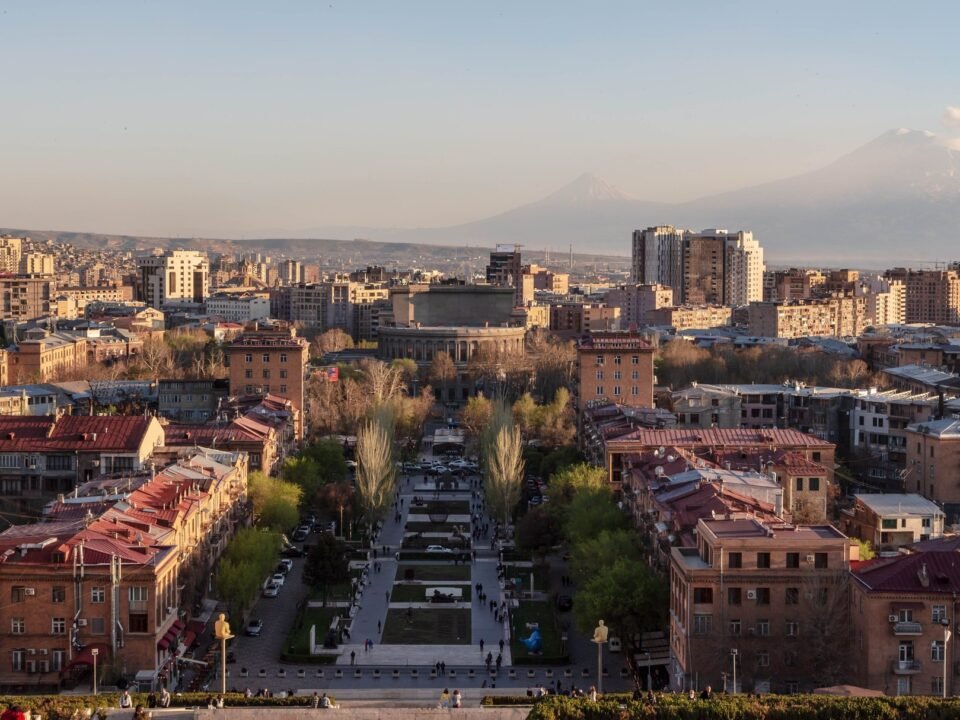
From Japan to Armenia for limb lengthening: visa, flights, the zairyu-todoke, medicines and insurance
A practical guide for patients travelling from Japan to Yerevan: no visa for up to 180 days, flight routes, embassy registration, the permit for bringing painkillers home, and what Japanese insurance and tax rules will not cover.
Read the article
The best country for limb lengthening doesn’t exist. How to pick yours
Countries do not operate; surgeons do. Seven countries compared on what a country actually decides: price, visa, the three-month stay, language and follow-up, with five questions to rank them for yourself.
Read the articleLimb lengthening abroad from China, Japan, Korea and Russia
A Chinese reader cannot have it at home. A Japanese reader can, at ¥17.8 million. A Korean reader can, at a wide range of prices. A Russian reader lives where it was invented. One section per market: visas, flights, money, language.
Read the articleBegin with a conversation.
No commitment, no pressure. Send your questions and, if you have them, your X-rays. You will hear back from a person within one working day.
Book a private consultation