Preparing for limb lengthening abroad: a 90-day checklist
The patients who do well in week six are usually the ones who did boring things in week minus eight. A dated checklist from ninety days out to the flight home: tests, paperwork, work, money, packing and follow-up.
Medically reviewed by Prof. Arshak Mirzoyan, MD, DMedSc. Last reviewed 16 October 2026.
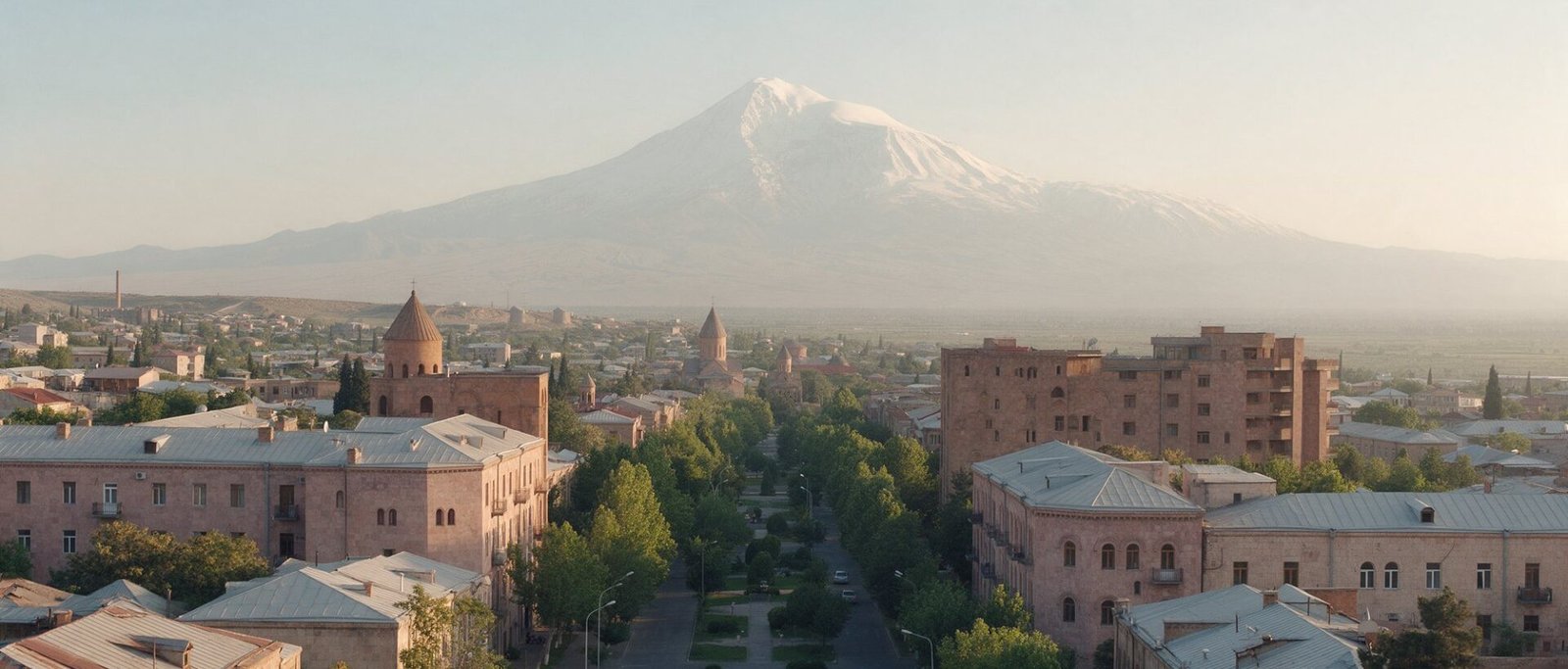
In short: A dated preparation plan for limb lengthening abroad: at 90 days, X-rays, blood tests and vitamin D; at 60, work, money, companion and apartment; at 30, packing for loose trousers and remote work; then the flight out, the first week, flying home with DVT precautions and a fit-to-fly letter, and the X-rays and video reviews you arrange in advance.
The patients who do well in week six are usually the ones who did boring things in week minus eight. They had their vitamin D tested and corrected before anyone cut bone. They had the awkward conversation with their manager in good time. They arrived with trousers that fit over a frame and shoes they could get into without bending, and they had already found a radiology clinic near home that would take an X-ray on request in month five.
None of this is difficult. Most of it is simply done late or not at all, and then it costs sleep in Yerevan or money afterward. What follows is the sequence we walk every patient through, with dates, written for someone coming to us but useful wherever you go. It assumes a single-segment LON plan and a 10–14 week stay; staged plans add a second round of the same.
Ninety to sixty days out: X-rays, blood and the surgeon’s first look
Everything starts with X-rays, because the surgeon decides candidacy from them and nothing else moves until he has. Your coordinator tells you exactly which views are needed; a hospital or private radiology clinic at home takes them, and you send the digital files, not phone photos of a screen. With the X-rays go your height and weight, age, a short medical history, current medications, and an honest answer about smoking and vaping. The surgeon reviews the set and you get a written answer on candidacy and, if yes, a written quote, the full risk list and the complication and revision policy together. Read all three before any money moves; the risks page is the public version of the first of them.
Then blood. The hospital requires a standard pre-operative panel, which is repeated on arrival, but one test is worth doing at home now because its result takes weeks to change: vitamin D. Deficiency is common in office workers in every country we draw patients from, and low vitamin D is a poor starting point for forming 8 cm (about 3 inches) of new bone. Test it, and if it is low, correct it under your doctor’s guidance starting now, not on the plane. Calcium and protein intake matter in the same way and are easier to fix; we go into the whole kitchen side in a separate piece on what you eat and whether you smoke.
Which brings us to nicotine. The non-smoking commitment is not a formality. Nicotine slows the regenerate, and the surgeon asks for it to stop well before surgery and to stay stopped through consolidation. If you vape, that counts. Ninety days out is the moment to begin, because quitting at the same time as major surgery and a foreign apartment is harder than quitting now. Alcohol should come down too, and if you take anti-inflammatories regularly, ask the surgeon, because NSAIDs are sometimes restricted while the regenerate forms.
Weight, finally. A BMI under 30 is preferred; over 35 is referred to the surgeon individually. Sixty to ninety days is enough to move a few kilograms in the right direction if you are near a line, and the bone, the knees and the physiotherapist will all notice.
Sixty to thirty days: work, money and the people at home
You will be away 10–14 weeks and then partly immobile at home for some months more. Decide early how you will describe that, because the story has to hold for a season. Some patients say surgery and leave it there; some say an extended work trip; some tell everyone. All three work. What does not work is improvising in week four when a colleague asks for a video call with the camera on and you are lying on a physio table.
Remote work is realistic and most of our patients do it. Yerevan is UTC+4, three or four hours ahead of London, eight or nine ahead of New York, eleven or twelve ahead of Los Angeles and five behind Tokyo and Seoul. For Europeans the day lines up; for Americans the working day starts in the Yerevan afternoon, after physiotherapy, which many find suits them. The apartments we use have fibre internet and a desk, and the stay page describes them. Tell your employer the dates now, and if you need a medical letter for leave, ask your coordinator for it in writing.
Money needs a line-by-line budget rather than a figure in your head. The medical package with us is $4,000 per centimetre (8 cm: $32,000) for a single-segment LON plan, all-inclusive on the medical side, with the written quote following the surgeon’s X-ray review. On top of that: flights for you and perhaps a companion, the apartment at from about $900 to $1,400 per month, meals, travel insurance, and the optional nail removal in one to two years, quoted separately. The cost page lists what the package covers item by item. Add a buffer; the surgeon may ask you to stay a week or two longer if consolidation is slow, and the people who budgeted for that are relaxed about it.
A companion is the question we are asked most in this window. Most patients come alone and manage. The first two weeks are when company helps most: the hospital nights, the first days in the apartment, the first trips to physio. A partner or parent who comes for a fortnight and leaves is a common and sensible pattern. Beyond that you will have a coordinator, daily physiotherapists and visiting nurses, and a routine. If your companion is staying for the whole stay, choose the apartment with that in mind.
This is also the window to settle practicalities at home: a power of attorney or simply access for someone to handle post and bills, pausing subscriptions, and telling your bank you will be spending abroad for three months so your card is not frozen in week one.
The last month: the packing list
Pack for someone who will not bend at the hip comfortably for a while and who will have, with LON, a lightweight external frame on each leg during distraction. That rules out most of your wardrobe and all of your luggage habits. You will not be carrying your own suitcase after the first week, so pack lighter than feels natural and buy anything bulky in Yerevan, where shops are cheap and your coordinator knows where things are.
- Trousers with wide legs, or with zips or poppers down the side, that fit over a frame. Tracksuit bottoms a size up, cut at the seam if needed. Shorts for the apartment and for physio.
- Shoes you can get into without bending or tying laces: slip-ons or trainers with elastic laces. One good pair with grip; polished stone in Yerevan is slippery when wet.
- Loose, long tops that cover the hip incision area when you want them to.
- Any regular medication in original packaging with the prescription, enough for the whole stay plus a margin.
- Copies of your X-rays, reports and blood results, digital and on paper.
- Laptop, headphones, a long charging cable (you will be charging from a bed), and a type C/F plug adapter for 230 V if you are coming from the US, UK, Japan or China.
- A grabber tool and a long-handled shoe horn. Both feel absurd until day three.
- Entertainment that does not require a desk: books, a tablet, a series you have been saving. Weeks five to eight are long.
- Compression socks for the flights, both ways.
- Passport valid well beyond your return date, travel insurance documents, and the coordinator’s number written somewhere other than your phone.
Leave at home anything you would have to bend to use and anything heavy. A walker, crutches and a wheelchair are provided; do not bring your own.
The timeline in one table
| When | What | Why it cannot wait |
|---|---|---|
| 90 days out | X-rays and history to the surgeon; vitamin D test; stop nicotine | Candidacy is decided from X-rays; vitamin D takes weeks to correct; nicotine slows the regenerate |
| 75 days | Read the written quote, risk list and complication policy; decide | Nothing should be paid before all three are read |
| 60 days | Tell your employer; book flights; choose apartment; companion decision | Dates fix the surgeon’s calendar; apartments with elevators go first |
| 45 days | Line-by-line budget with buffer; travel insurance; bank notified | Avoids a frozen card in week one and a panic in week twelve |
| 30 days | Packing list; find a radiology clinic and a physiotherapist near home | Follow-up X-rays at home go to the surgeon; easier to arrange while mobile |
| 7 days | Confirm pickup, apartment, interpreter if needed; last normal workouts | Arrival day is easier when nothing is improvised |
| Arrival | In-person consultation, hospital pre-operative tests | The surgeon examines you before the final plan is set |
| Week 10–14 | Frame removal, fit-to-fly letter, wheelchair assistance booked | The flight home is the last medical event of the stay |
The flight out and the first week
Arrive with a margin before surgery, not the night before; your coordinator sets the exact dates around the in-person consultation and the hospital’s pre-operative tests. The flight out is the easy one. Fly economy if you like, but take an aisle seat anyway and get used to the idea of compression socks, because the return will demand both.
The first week is surgery, about three to five hours under general anesthesia; about four nights in a private room; and the move to the apartment. Physiotherapy starts in hospital, and with LON you are partly weight-bearing with a walker from the first week, because the nail protects the regenerate. Distraction begins on day five to seven. Pain is at its worst in the first three to five days and is managed with proper analgesia; after that it becomes discomfort, tightness and poor sleep rather than pain. We have set out the day-by-day timeline elsewhere, so here we will only say that the first week is the one where preparation pays most visibly: the right trousers, the grabber, the companion, the manager who already knows.
Flying home with new bone
At the end of distraction the frame comes off, the nail stays in to protect the regenerate while it consolidates, and you fly home. That flight needs more planning than the one out, and the planning starts about two weeks before it.
Clotting first. A long flight after major leg surgery raises the risk of deep vein thrombosis, so the surgeon assesses your DVT risk before you travel and tells you what precautions apply to you; compression stockings and an aisle seat so you can stand and move are the baseline, and anything beyond that is his call, not ours and not the internet’s. Wheelchair assistance is arranged at both airports and at the connection if you have one, and we would take it even if you feel you could manage, because terminals are long and standing in queues is not the same as walking. A fit-to-fly letter from the surgeon goes in your hand luggage, with a note about the implants; security scanners may react to the nails, and the letter settles it.
You will be on crutches. Board early, keep the crutches with you, ask for them to be stowed where you can reach them. Choose a connection with a generous gap; a tight one with assistance is more stressful than a long one without. If someone can meet you at the other end, let them, because the last mile from the airport is where most people discover how tired they are.
After you land: X-rays, video reviews and the local physiotherapist
Consolidation takes months, and in that period the surgeon is still your surgeon, just at a distance. Follow-up X-rays taken near home go to him, and there are video reviews at around three, six and twelve months, plus whenever something worries you. For that to work, you need two things arranged before you leave for Yerevan, while you are still mobile and have the energy to make phone calls.
The first is a radiology provider near home that will take X-rays on request, with the views the surgeon specifies, and give you the digital files. Some public systems make this awkward without a local referral; a private clinic usually does not. Ask the question in month minus one, not month five. The second is a physiotherapist who will continue the stretching and strengthening program you have been doing five days a week; your Yerevan physiotherapists write out the program, and a local professional who has seen it before you arrive on crutches is worth a great deal. Unaided walking typically comes a few months after frame removal, once the regenerate has consolidated and the surgeon has seen it on X-ray; running and impact sport wait for full consolidation and his clearance, often nine to twelve months, and some athletes report lasting loss of sprint and jump performance, which is worth knowing before rather than after.
A general practitioner at home who knows what you have done and has the surgeon’s letter is the third piece, and the cheapest.
The last thing to prepare
Expectations, which no packing list covers. Prepare for weeks five to eight to feel flat; nearly everyone’s do. Prepare for the day the target length is reached to be quieter than you imagined, because you are still on crutches and the mirror does not change the way you expected. Prepare to be the same person afterward, a few centimetres taller. People who have prepared for that tend to be glad they did it; the regrets in this field cluster among those who expected something else to change. If you want the fuller picture of the country you will be living in, our guide to Armenia includes the parts that count against it.
If you have read this far and the ninety-day clock has not started because nobody has looked at your X-rays yet, that is the first item. Send them to the surgeon and let the answer, yes or no, set everything else in motion.
This article is educational and is not a substitute for a consultation with a qualified surgeon. Individual results vary.
Questions people ask
What tests do I need before limb lengthening surgery?
The surgeon first needs X-rays of the views your coordinator specifies, plus height, weight, medical history and medications, to decide candidacy. The hospital requires a standard pre-operative blood panel, repeated on arrival. Test vitamin D at home early and correct any deficiency under your doctor’s guidance, because low levels are a poor starting point for new bone formation.
How long before limb lengthening should I stop smoking?
As early as you can, ideally the moment you decide. Nicotine slows the bone regenerate, so a non-smoking commitment covering the time before surgery and the whole consolidation period is a condition of treatment, and vaping counts. Starting ninety days out is far easier than quitting in the same week as major surgery and a move to a foreign apartment.
What should I pack for limb lengthening surgery abroad?
Wide-legged or side-zip trousers that fit over a frame, slip-on shoes with grip, loose long tops, your medications in original packaging, copies of X-rays and reports, a laptop with a long cable and a type C/F adapter for 230 V, a grabber, compression socks and entertainment. Pack light; you will not carry your own suitcase after week one, and a walker, crutches and wheelchair are provided.
Can I work remotely during limb lengthening?
Most of our patients do. Yerevan is UTC+4: three or four hours ahead of London, eight or nine ahead of New York and five behind Tokyo. Apartments have fibre internet and a desk. Physiotherapy takes part of each weekday, so plan a reduced schedule, and expect the first two weeks and weeks five to eight to be lower-energy than the rest.
Is it safe to fly home after limb lengthening?
With preparation, yes for most patients. The surgeon assesses your DVT risk and sets precautions; compression stockings and an aisle seat are the baseline. A fit-to-fly letter mentioning the implants goes in your hand luggage, wheelchair assistance is booked at both airports, and you travel on crutches with the nail still in place protecting the regenerate.
Do I need a companion for limb lengthening abroad?
Not necessarily. Most patients come alone and manage with a coordinator, daily physiotherapists and visiting nurses. Company helps most in the first two weeks: hospital nights, the move to the apartment and the first physiotherapy trips. A partner or parent who stays a fortnight and then leaves is a common and sensible arrangement.
Keep reading

The best country for limb lengthening doesn’t exist. How to pick yours
Countries do not operate; surgeons do. Seven countries compared on what a country actually decides: price, visa, the three-month stay, language and follow-up, with five questions to rank them for yourself.
Read the article
From the UK, Europe, Canada and Australia to Armenia for limb lengthening: visas, health cover and insurance
What patients from the UK, the EU, Canada, Australia and New Zealand need for treatment in Yerevan: who needs a visa (Canadians do), why the GHIC and EHIC do not apply, travel advice, flights, and the truth about complication insurance.
Read the article
Limb lengthening in Armenia: what to know before you book
Most people who message us had never thought about Armenia before they typed it into a map. The surgeon, the hospital, visas, flights, money, safety, apartments, and the drawbacks we would rather you heard from us.
Read the articleBegin with a conversation.
No commitment, no pressure. Send your questions and, if you have them, your X-rays. You will hear back from a person within one working day.
Book a private consultation