Limb lengthening recovery timeline: surgery to running, month by month
Three calendars run at once: the bone's, the body's and your employer's. A dated timeline for an 8 cm LON lengthening, from day 0 to the optional nail removal two years later, with what moves the dates.
Medically reviewed by Prof. Arshak Mirzoyan, MD, DMedSc. Last reviewed 16 October 2026.
In short: For a single-segment LON lengthening of up to 8 cm: about four hospital nights, distraction from day 5 to 7 at roughly 1 mm a day for about 80 days, frame removal near week 12, a 10 to 14 week stay in Yerevan, then months of consolidation at home. Remote work within weeks; running usually waits 9 to 12 months.
Every patient arrives with one date in mind, the flight home, and leaves with three calendars that do not agree. There is the bone’s calendar: roughly eighty days of distraction and then months of quiet hardening that no amount of willpower speeds up. There is the body’s calendar: muscles, tendons and nerves that lag the bone and decide when you walk, sit cross-legged and run. And there is the employer’s calendar, the one with a number of weeks written on a form.
Most of the disappointment we see in recovery comes from assuming the three are the same. They are not. This post lays them side by side, dated, for the plan we do most often: a single-segment LON lengthening of up to 8 cm (about 3 inches) on the femurs. Tibias and staged plans shift the dates, and we say where. Nothing below is a promise; the surgeon reads X-rays, not calendars, and the X-ray wins every time they disagree.
Days 0 to 4: the hospital days
Day 0 is surgery: 3 to 5 hours under general anesthesia, during which the nail goes in, the bone is cut and the lightweight frame is fitted. (If you want the mechanics, they are on our page on how the surgery works; this post is about time, not technique.) You wake in a private room and spend about four nights there.
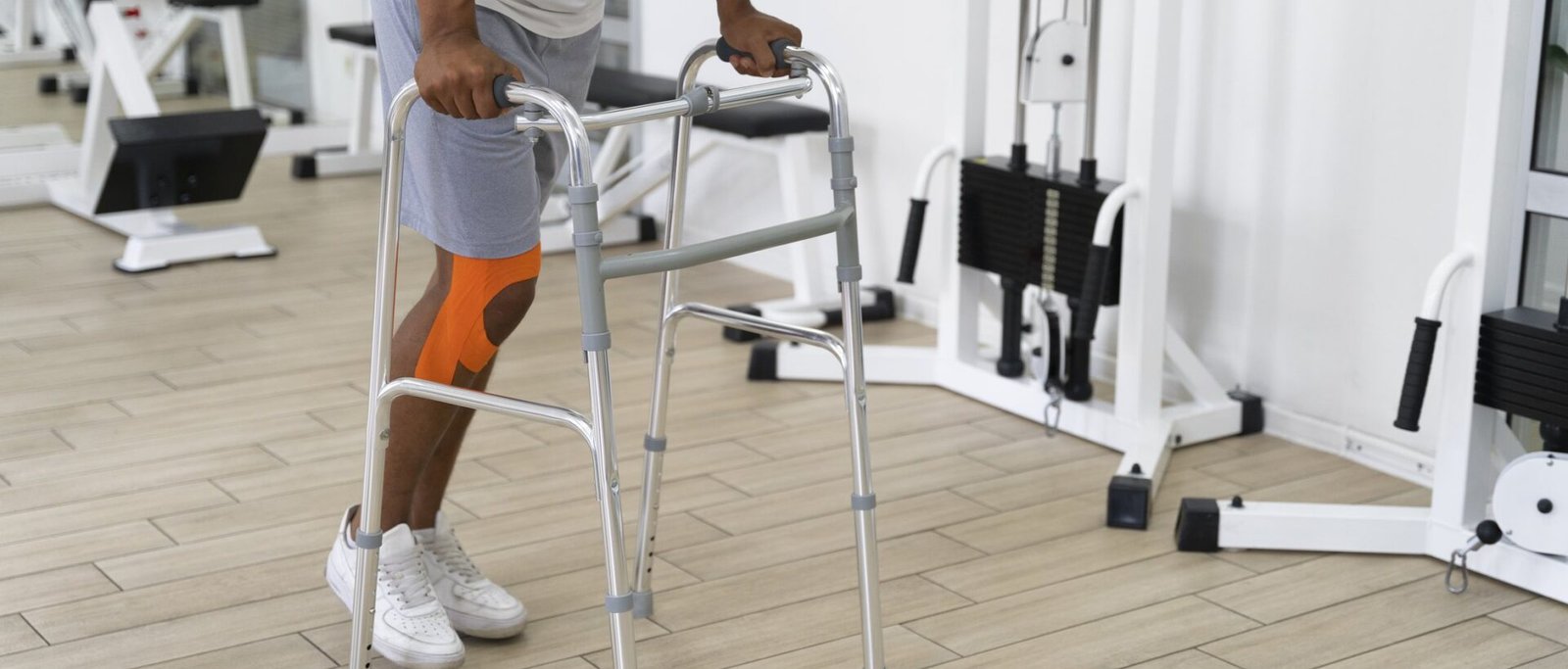
These are the sore days, and they are also busier than people expect. Day 1 is mostly managing pain and swelling. By day 2 or 3 the physiotherapist has you standing behind a walker and taking short steps with partial weight, which the internal nail makes possible. Nurses teach you, or your companion, how pin sites are cleaned. The surgeon reviews the post-operative X-ray. Around day 4 you are discharged to the apartment with oral medication, a walker, a wheelchair for distance, and a written schedule.
Nothing has been lengthened yet. That is deliberate. The cut bone needs a few quiet days, called latency, to begin forming the soft callus that distraction will then stretch.
Days 5 to 7 onward: a millimetre a day, for about eighty days
Between day 5 and day 7 the first turn happens. From then on it is a quarter of a millimetre, four times a day, about 1 mm in total, every day, for as long as it takes to reach the planned length. For 8 cm that is roughly 80 days. For 5 cm (about 2 inches) it is roughly 50. The rate is not a target to beat; going faster starves the regenerate, going slower risks the new bone hardening before you reach the length. The surgeon may adjust it, usually downward, if soft tissue or a nerve complains.
Every two weeks there is an X-ray, and this is the real clock of the process. The surgeon is looking at three things: the width of the gap, which should match the arithmetic of the turns; the density of the new bone forming in it, which should look like a faint column rather than a void or a solid bar; and the alignment of the two bone ends, which the frame keeps straight. Those two-weekly films, and all the others taken during the stay, are inside our package ($4,000 per centimetre (8 cm: $32,000) for single-segment LON; the written quote follows the surgeon’s review of your own X-rays).
In parallel, physiotherapy five days a week and nurse visits for pin care fill the weekdays. The structure is monotonous by design, and the monotony is itself a recovery phase: patients consistently describe a low somewhere between weeks five and eight that has more to do with sameness than with pain. Knowing the date it tends to lift, when the finish is countable in days, helps more than any advice.
The timeline, dated
| When | Approximate gain | What happens | Where you are |
|---|---|---|---|
| Day 0 | 0 | Surgery, 3 to 5 hours; nail, osteotomy, frame | Hospital |
| Days 1 to 3 | 0 | Pain management; first standing with a walker; pin-care teaching | Hospital |
| Day 4 | 0 | Discharge with walker, wheelchair, medication schedule | Apartment, Yerevan |
| Days 5 to 7 | First millimetre | Distraction begins: 0.25 mm four times a day | Apartment |
| Week 2 | About 1 cm | First distraction X-ray; physio routine established | Apartment |
| Week 4 | About 2 cm | Surgical pain gone; tightness is the main sensation | Apartment |
| Week 6 | About 3.5 cm | Walker usually swapped for crutches; the mid-stay low begins | Apartment |
| Week 8 | About 5 cm | Physio at its hardest; knee range the daily battle | Apartment |
| Week 10 | About 6.5 cm | Finish countable in days; morale improves | Apartment |
| Week 12 | About 8 cm | Target reached; frame removed in hospital; nail stays | Hospital, then apartment |
| Weeks 12 to 14 | Final | Pin sites heal; fit-to-fly check; flight home on crutches | Yerevan, then home |
| Month 3 | First video review with the surgeon; home X-ray sent | Home | |
| Months 3 to 5 | Consolidation; two crutches to one; local physio continues | Home | |
| Months 4 to 6 | Cane, then unaided steps as X-rays show mature regenerate | Home | |
| Month 6 | Second video review; low-impact exercise if cleared | Home | |
| Months 9 to 12 | Running and impact sport only after full consolidation and clearance | Home | |
| Month 12 | Third video review | Home | |
| Years 1 to 2 | Optional nail removal, quoted separately | Yerevan or home |
The gain column is arithmetic (about 1 mm a day from day 6), not a measurement of any particular patient. A 6 cm (about 2.4 inch) plan reaches its target around week 9 and leaves Yerevan earlier; tibia plans run the same arithmetic but tend to spend longer in the middle rows because the Achilles and the foot need more time. The day-by-day version, with what to pack for each phase, is on our timeline page.
Weeks 12 to 14: frame off, then the flight
When the X-ray confirms the planned length, the frame comes off in a short procedure at the same hospital. The nail stays inside the bone to hold the length while the regenerate hardens. For most patients this is the emotional end of the stay, and the practical end of pin care, since the sites close within days.
Then the flight, which deserves more thought than it usually gets. You are flying long-haul on crutches with two legs of soft new bone and a raised clotting risk. Before departure there is a DVT risk assessment and a fit-to-fly letter from the surgeon. On the day: compression stockings, an aisle seat, wheelchair assistance booked at both ends, and getting up to move at intervals, which the aisle seat is for. Connections via Doha, Dubai or Istanbul are the usual route to the Americas and East Asia; the practical side, including what the airlines need from you, is on our stay in Yerevan page.
Patients sometimes ask whether they can stay longer. You can, and some do, particularly if the apartment is cheaper than their rent at home (from about $900 to $1,400 per month as a guide). But there is no medical reason to remain in Yerevan once the frame is off and the surgeon is satisfied; consolidation happens wherever you are.
Months 3 to 6 at home: consolidation, desks and driving
Consolidation is the long, undramatic phase in which the column of new bone turns from something that looks like fog on an X-ray into something that looks like bone. It takes months, more of them for more centimetres gained, and nothing you do accelerates it except the boring things: adequate protein, calcium and vitamin D, no nicotine, controlled weight-bearing and continued physiotherapy with a local therapist working from the surgeon’s notes.
Work is the question we get most about this phase, so here is the candid answer. Remote desk work is possible far earlier than month 3; most patients with a laptop job are doing a few hours a day from the second or third week in Yerevan, because the obstacle is fatigue, not ability, and the time difference (Yerevan is UTC+4) actually suits US and East Asian employers, whose working day falls in the Yerevan evening. Physical presence in an office is a different matter: commuting on crutches through a city is miserable and risky, and most people wait until they are down to a cane or nothing, which usually means month 4 to 6. Jobs that involve standing all day, lifting or driving professionally wait longer, and we would rather you negotiate that with an employer before surgery than from a sofa afterwards.
Driving is the surgeon’s call, and the honest framing is this: not during the stay, not while you need crutches to get to the car, and not until you can brake hard without hesitating. For most patients that lands somewhere in months 4 to 6, after a follow-up X-ray. Automatic transmission helps. Patience helps more.
Months 6 to 12: sport returns in an order
The video reviews at around 3, 6 and 12 months are where the next permissions come from, each one based on an X-ray taken near your home and sent to the surgeon. Low-impact exercise, typically a stationary bike and swimming, is usually the first thing cleared, often around the six-month review, and it is where strength lost over four months of crutches starts to come back. The gym follows, with the legs loaded gradually and nothing explosive.
Running and jumping wait for full consolidation and explicit clearance, which for most patients means nine to twelve months. We are deliberate about the words “most” and “may”: some people run comfortably at nine months, some are told to wait past a year, and some athletes report that sprint speed and jump height do not come all the way back. We would rather you hear that from us than from a forum a year from now. The evidence and the sequence are in our post on running and sport after limb lengthening.
The nail itself has one more appointment. Removal is optional, usually one to two years after surgery, minor compared with the lengthening, and quoted separately. Plenty of people never have it done. The reasons for and against are in the second surgery nobody budgets for.
What moves the dates
The timeline above is typical, which means some patients are ahead of it and some are behind, and the things that push it are predictable. Centimetres: every extra centimetre is ten more days of distraction and more weeks of consolidation, which is one reason the complication curve steepens beyond 5 to 6 cm per bone. Bone: tibias are slower, and staged femur-plus-tibia plans are two complete cycles, not one and a half. Age: healing in the forties and fifties is generally slower than in the twenties, though bone quality and health matter more than the birth year.
Habits: nicotine slows regenerate formation, which is why a non-smoking commitment is a condition of candidacy, and a vitamin D deficiency found after surgery costs time that testing before surgery would have saved. Compliance: patients who skip stretching lose knee range, and a knee that will not bend can make the surgeon slow or stop distraction short of the target. And complications, which are the big one: a delayed union adds months of consolidation; a pin-site infection that becomes a deep infection can add a procedure; premature consolidation, the bone hardening before the length is reached, can mean returning to the operating room. The full list, with honest frequencies and how each is handled, is on our risks and complications page.
None of these are reasons not to proceed. They are reasons to plan your leave, your money and your expectations around the slower version of the calendar, so that the typical version feels like good news.
If you are still deciding
Put the three calendars next to each other before you book anything. The bone needs about four months from surgery to the end of distraction and several more to harden. The body needs physiotherapy through all of it and strength work after. The employer needs a start date for your absence, a date for remote work, and a date for your return to the building, and those are three different dates. If you can make all three fit, the surgery becomes a scheduling problem rather than a leap.
If you want the dates for your own legs rather than the typical ones, the input is X-rays. Send them for a private review by Prof. Mirzoyan, and ask him to write the calendar he would actually plan for you, including how long he would want you in Yerevan.
This article is educational and is not a substitute for a consultation with a qualified surgeon. Individual results vary.
Questions people ask
How long does limb lengthening recovery take in total?
Count on about a year to full function for an 8 cm femur lengthening. The stay in Yerevan is 10 to 14 weeks, covering surgery, roughly 80 days of distraction and frame removal. Consolidation at home takes several more months, with unaided walking typically around months 4 to 6 and running after clearance at 9 to 12 months.
How long do you stay abroad for limb lengthening?
For single-segment LON, 10 to 14 weeks. That covers about four hospital nights, distraction at roughly 1 mm a day until the planned length is reached, frame removal, and a few days for the pin sites to close before flying. Shorter gains shorten the stay; a 6 cm plan reaches its target around week 9.
When can you go back to work after limb lengthening?
Remote desk work is usually possible for a few hours a day from the second or third week, with fatigue rather than ability as the limit. Returning to an office in person tends to wait until you are off crutches at home, typically months 4 to 6. Physical or standing jobs wait longer and should be negotiated with your employer before surgery.
How often are X-rays taken during limb lengthening?
Every two weeks during distraction, plus post-operative and pre-removal films. The surgeon checks the width of the gap against the turns, the density of the new bone forming in it, and the alignment of the bone ends. After you return home, follow-up X-rays taken locally are sent to the surgeon ahead of the video reviews at around 3, 6 and 12 months.
When can you drive after limb lengthening?
Not during the stay, not while you need crutches to reach the car, and not until you can brake hard without hesitating. For most patients that is somewhere in months 4 to 6, after a follow-up X-ray and the surgeon’s agreement. An automatic transmission makes the return easier; the surgeon’s clearance is what matters.
What slows down limb lengthening recovery?
More centimetres, tibia rather than femur, older age, nicotine, uncorrected vitamin D deficiency, and skipped physiotherapy all extend the timeline. Complications extend it most: delayed union adds months of consolidation, a deep infection may add a procedure, and premature consolidation can mean a return to the operating room. Plan around the slower version.
Keep reading

Pain relief during limb lengthening: the medicines, the nerve blocks and the NSAID question
How pain is actually controlled during limb lengthening: anaesthesia and nerve blocks, the daily base painkiller, opioids, the anti-inflammatory controversy, Botox, and what you can do yourself.
Read the article
A Tuesday in week five: what a day of limb lengthening actually looks like
Day 31, both femurs, 2.6 cm in, a Yerevan apartment with an elevator. Four turns, a nurse, a physiotherapist with a goniometer, a Denver standup at 7 p.m., a café on crutches, and a cramp at 2:10 a.m. A composite day, told straight.
Read the article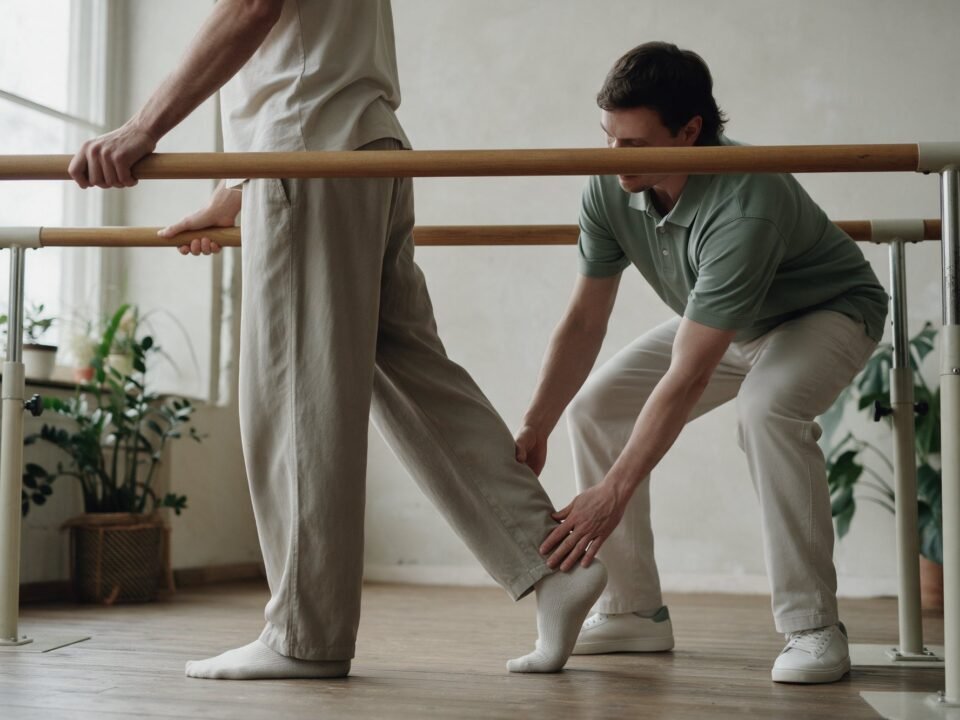
The physiotherapy that decides your result: stretching, strength and the hours nobody shows on Instagram
Bone grows on schedule; muscle and tendon do not. The sixty-odd sessions and the home rounds nobody films decide whether your knee bends and your heel reaches the floor. What the program contains, and what skipping it costs.
Read the articleBegin with a conversation.
No commitment, no pressure. Send your questions and, if you have them, your X-rays. You will hear back from a person within one working day.
Book a private consultation