The LON method explained: lengthening over a nail, step by step, with the published numbers
LON combines an external frame, used only for the lengthening, with a nail inside the bone that protects it afterwards. Here is what each step involves, what the studies report and where the method struggles.
Medically reviewed by Prof. Arshak Mirzoyan, MD, DMedSc. Last reviewed 20 October 2026.

In short: In lengthening over nail (LON) a surgeon places a steel nail inside the bone, uses a short-term external frame to lengthen it about 1 mm a day, then locks the nail at the new length and removes the frame. The nail carries the load while the new bone hardens. It shortens frame time compared with the classic Ilizarov method and costs far less than a magnetic nail, but it needs two stages and careful infection control.
If you have searched for the “LON method” you have probably seen it described in one line: frame plus nail. That is correct and also not much use when you are trying to decide whether it is the right method for your own legs. This article goes through it properly.
Where LON comes from
The classic Ilizarov method keeps the bone in an external ring frame for the whole treatment, which means months of pins through the skin and a long period before the frame can be removed safely. In the late 1990s, Dror Paley and colleagues described a hybrid: lengthen with the frame, but put a nail inside the bone so that the frame can be removed early and the nail protects the new bone while it hardens. That is lengthening over nail, or LON. Today it is one of the most used methods for cosmetic lengthening worldwide, accounting for about a third of patients in the 2020 systematic review of cosmetic stature lengthening (253 of 795, or 31.8 percent).
The steps, in order
Operation one. Under general anaesthesia the surgeon passes a nail down the marrow canal of the bone, usually leaving it unlocked at one end so the bone can slide. A small external frame is attached with pins or wires, the bone is cut through small incisions, and everything is checked on X-ray.
Waiting. About five to seven days with no movement while the first soft callus forms across the cut.
Lengthening. The frame is turned in small steps, in total about a millimetre a day. X-rays every one to two weeks check that the new bone is forming at the right pace and that the bone is not drifting off axis. This is the stage when you walk with crutches or a walker and do your daily physiotherapy.
Operation two. When the target length is reached, a second, shorter operation locks the nail at the other end and removes the frame. From this moment the nail carries the load and the leg is internally supported.
Consolidation. Bone continues to harden for months. You build weight-bearing under supervision, clearing each step on X-ray.

Possible third operation. Many surgeons advise removing the nail after the bone is solid, usually after a year or more, which we cover in nail removal after limb lengthening.
What the published numbers say
Numbers on LON are less glossy than marketing but they are useful.
A single-centre series with follow-up from three months to twelve years reported on 27 lengthenings in 23 patients, mostly tibias, with an average gain of 4.6 cm. The average time in the external frame was 12.9 weeks, equal to an external fixation index of about 17.8 days per centimetre. Eight of the 27 lengthenings, or 29.6 percent, had complications of some kind, including delayed union needing bone grafting, persistent equinus needing Achilles lengthening, and premature consolidation of the femur needing a repeat cut. The authors reported no deep infection of the marrow canal and no neurovascular complications, and they warned that pin-track infection and deep infection around the nail must be prevented with great care, because contaminating a nail is the worst-case scenario of the method.
A Korean series of tibial LON in 40 young patients, 80 segments, with an average gain of 7.73 cm (about 23.5 percent of the original length), reported a frame time of 1.1 months per centimetre and a bone-healing index of 1.7 months per centimetre. Equinus appeared in 58 of 80 segments and valgus angulation in 20, and the authors concluded that the nail does not completely prevent the regenerate from drifting, though satisfaction was good and equinus could be corrected with early action.
Put the two together and you get the honest picture. LON shortens frame time and gives good results, but it is not complication-free, and some of the problems it avoids relative to Ilizarov are replaced by others.
LON compared with the alternatives
Against the Ilizarov frame, LON means fewer weeks with pins in the skin, easier daily life afterwards and less risk that a weak new bone bends when the frame comes off. The frame method wins when you need to correct angles or rotation at the same time, which a nail makes harder. Our article on the Ilizarov method explains where it still shines.
Against a magnetic nail, LON costs substantially less and uses well-understood equipment, but it requires a second operation and weeks of an external frame, with pin-site care. We compare daily life with each in LON, Precice or Ilizarov.
The weak points
Pin-site infection is the most common frame-related issue, and with LON it carries more weight because bacteria near the frame pins can reach the nail. This is managed with strict pin care, early antibiotics and, if necessary, removal of the frame sooner than planned. Equinus, as described above, is the most common difficulty when the tibia is lengthened. Alignment can drift because the nail only partially constrains the bone. Delayed healing is more likely in smokers and in poor nutrition, as we explain in what you eat and whether you smoke.
Who it suits
LON is a good fit for healthy adults whose bone is the right diameter for a nail, who want a lengthening of 5 to 8 cm, and for whom cost matters. It is less suitable for people who need angular correction, for children whose growth plates are open, and for anyone with an active infection. Whether it is better for the thigh bone or the shin is a separate question, which we discuss in femur or tibia. A fuller treatment of shin lengthening is in our article on tibia lengthening.
How we approach it
At our partner hospital in Yerevan Prof. Arshak Mirzoyan, trained in the Ilizarov tradition, uses LON and frame methods depending on the bone and goals. Our overview page on the LON method describes the pathway, and the approximate cost range is currently $4,000 per centimetre (8 cm: $32,000), an estimate to be confirmed in a consultation. To see how this would apply to your legs, you can send your X-rays for a private consultation.
This article is educational and is not a substitute for a consultation with a qualified surgeon. Individual results vary.
Questions people ask
What does LON stand for in limb lengthening?
LON stands for lengthening over nail. A steel nail is placed inside the bone, an external frame is used to lengthen it, and after the target length is reached the nail is locked and the frame removed.
How long does the frame stay on in the LON method?
In a published series the average was about 12.9 weeks for a mean gain of 4.6 cm, or roughly 18 days per centimetre. Individual times vary with the amount lengthened and how fast the bone forms.
Is LON better than the Ilizarov method?
It is better for reducing time in the frame and for protecting the new bone, but the Ilizarov frame is better when angles or rotation must be corrected. The choice depends on your bone, your goals and the surgeon’s experience.
Is LON better than Precice magnetic nails?
LON is considerably cheaper and uses proven equipment, but it needs two operations and a period with an external frame. Magnetic nails avoid the frame but cost much more and do not suit every bone.
What are the risks of the LON method?
The main ones are pin-site infection, which can spread to the nail, ankle equinus when the shin is lengthened, delayed healing, angular drift of the new bone and the need for a second operation. A published series reported complications in about 30 percent of lengthenings, mostly solved during treatment.
Do you need the nail removed after LON?
Many surgeons recommend removal once the bone is solid, often a year or more after surgery, but not every patient needs it. The decision depends on symptoms, the implant and local practice.
Keep reading

The Ilizarov method, from a Siberian bicycle shop to today’s operating rooms
A country doctor, a nut turned the wrong way, a high jumper and an Italian explorer: how the ring frame from Kurgan became the basis of every lengthening method, and where it still belongs today.
Read the article
Can You Have Limb Lengthening Twice? A Second Lengthening Explained
Whether you can have limb lengthening twice, how a staged femur-then-tibia plan differs from re-lengthening the same bone, how long to wait and what the research shows.
Read the article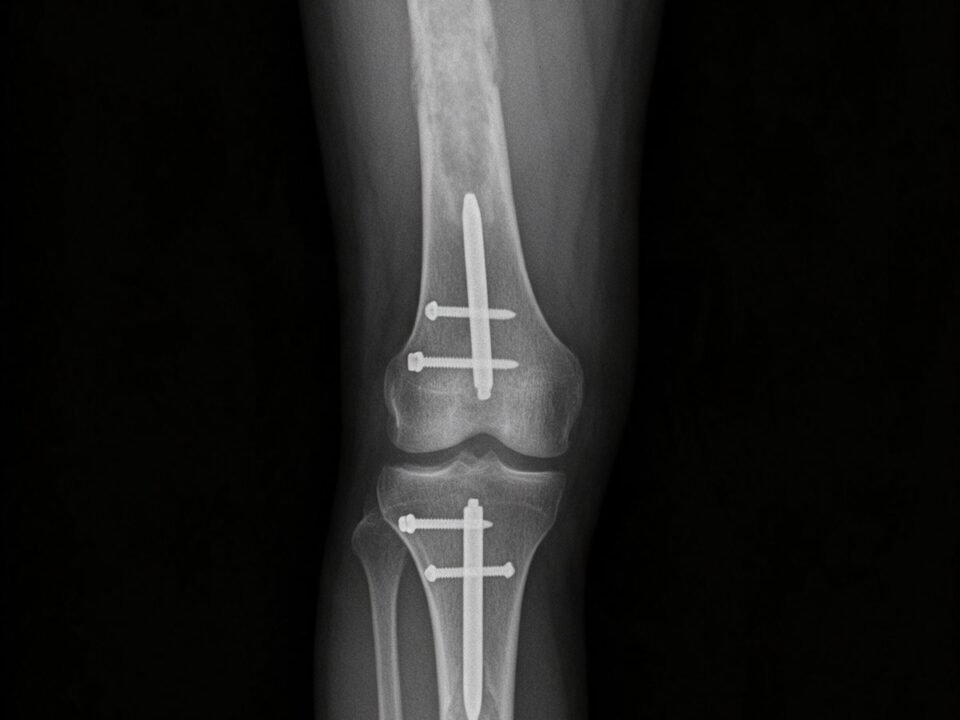
Femur or tibia? Choosing which bone to lengthen (and why proportions decide)
Most people ask which bone gives more centimetres. Surgeons ask which bone is relatively short on you. Gains, pain, speed, equinus, the peroneal nerve, and what a standing X-ray shows.
Read the articleBegin with a conversation.
No commitment, no pressure. Send your questions and, if you have them, your X-rays. You will hear back from a person within one working day.
Book a private consultation